Adapting with Agency
Masters Thesis
Hout Bay, SA
2018
A Masters thesis that asks how spatial agency can drive the continual adaptation of an existing building for the benefit of a community
The project’s focus was on the community of Hangberg in my hometown of Hout Bay, South Africa.
The community has been displaced from the sea due to the apartheid regime and the escalation of commercial fishing.
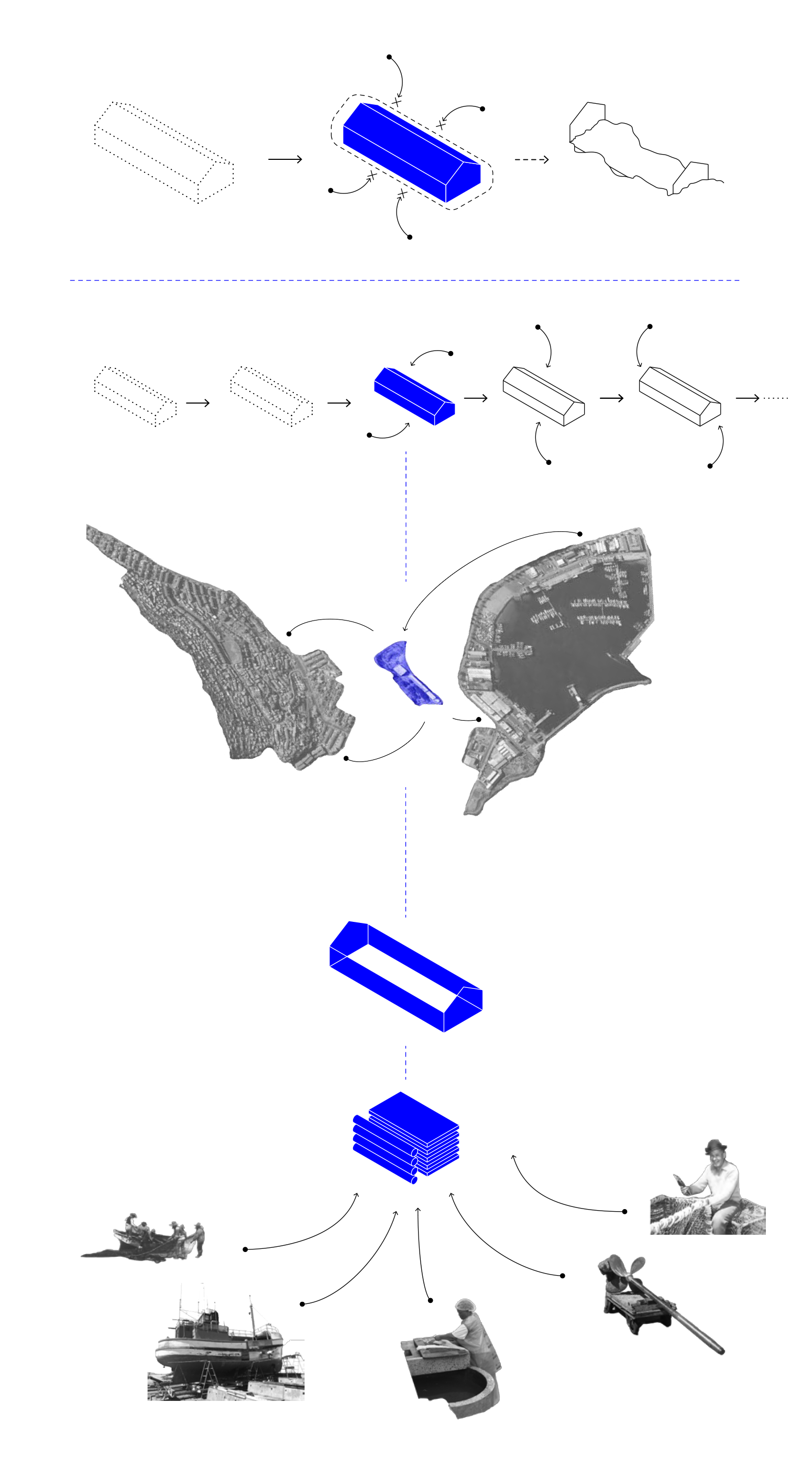
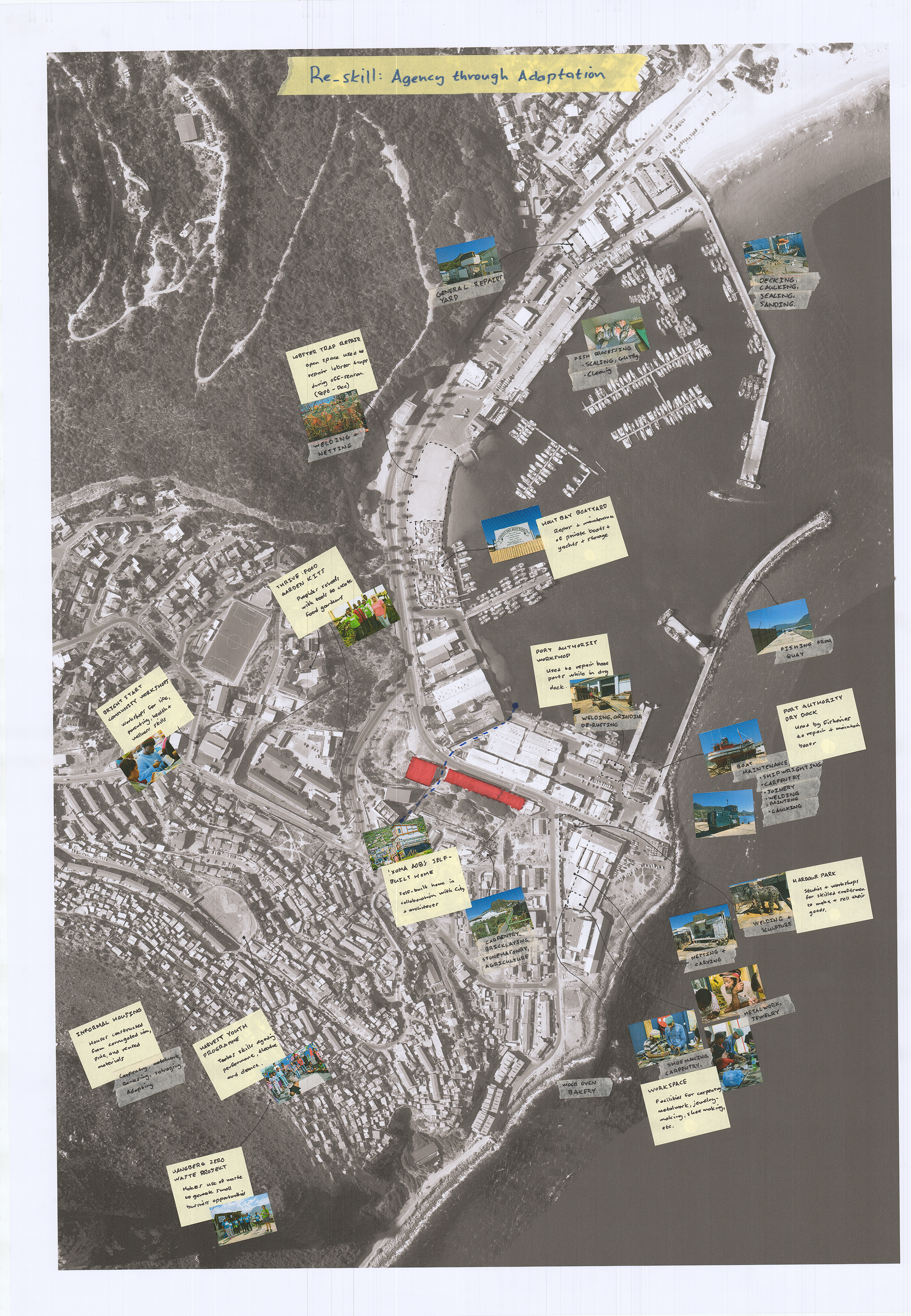
Having researched the concepts of spatial agency and adaptability, the process began with understanding the existing skills, craft and material networks in the community, before identifying a site to appropriate using them.
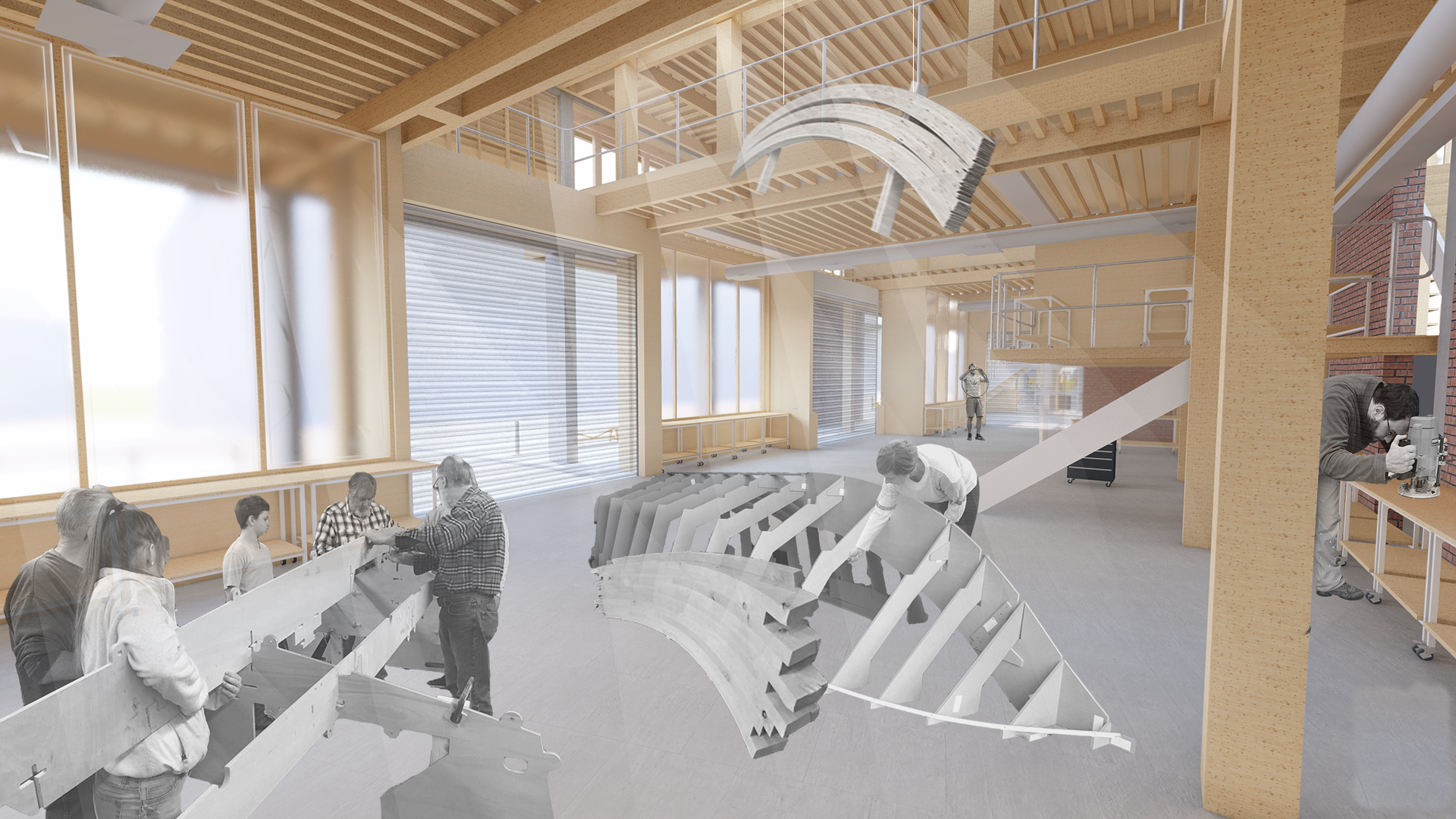
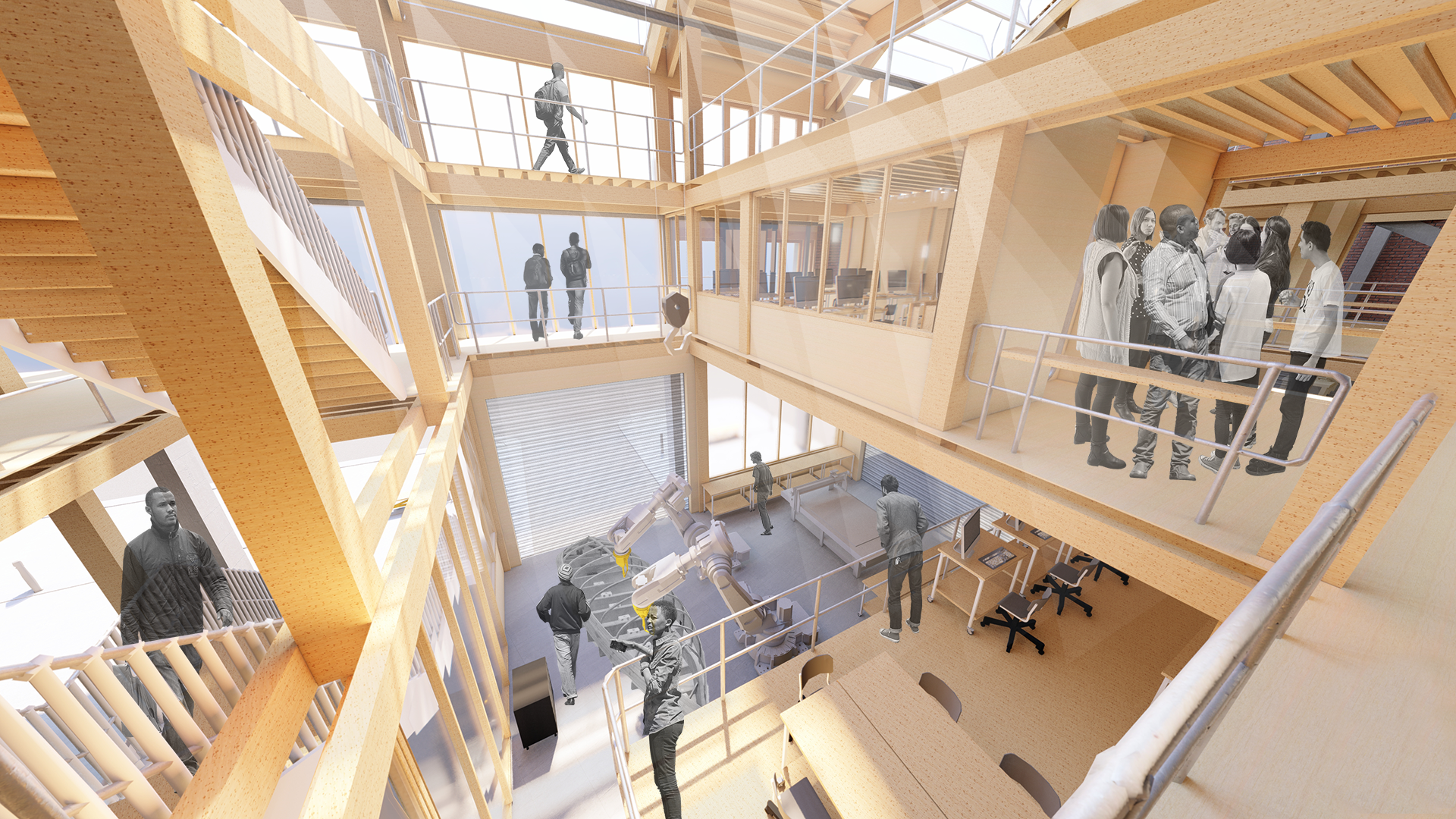
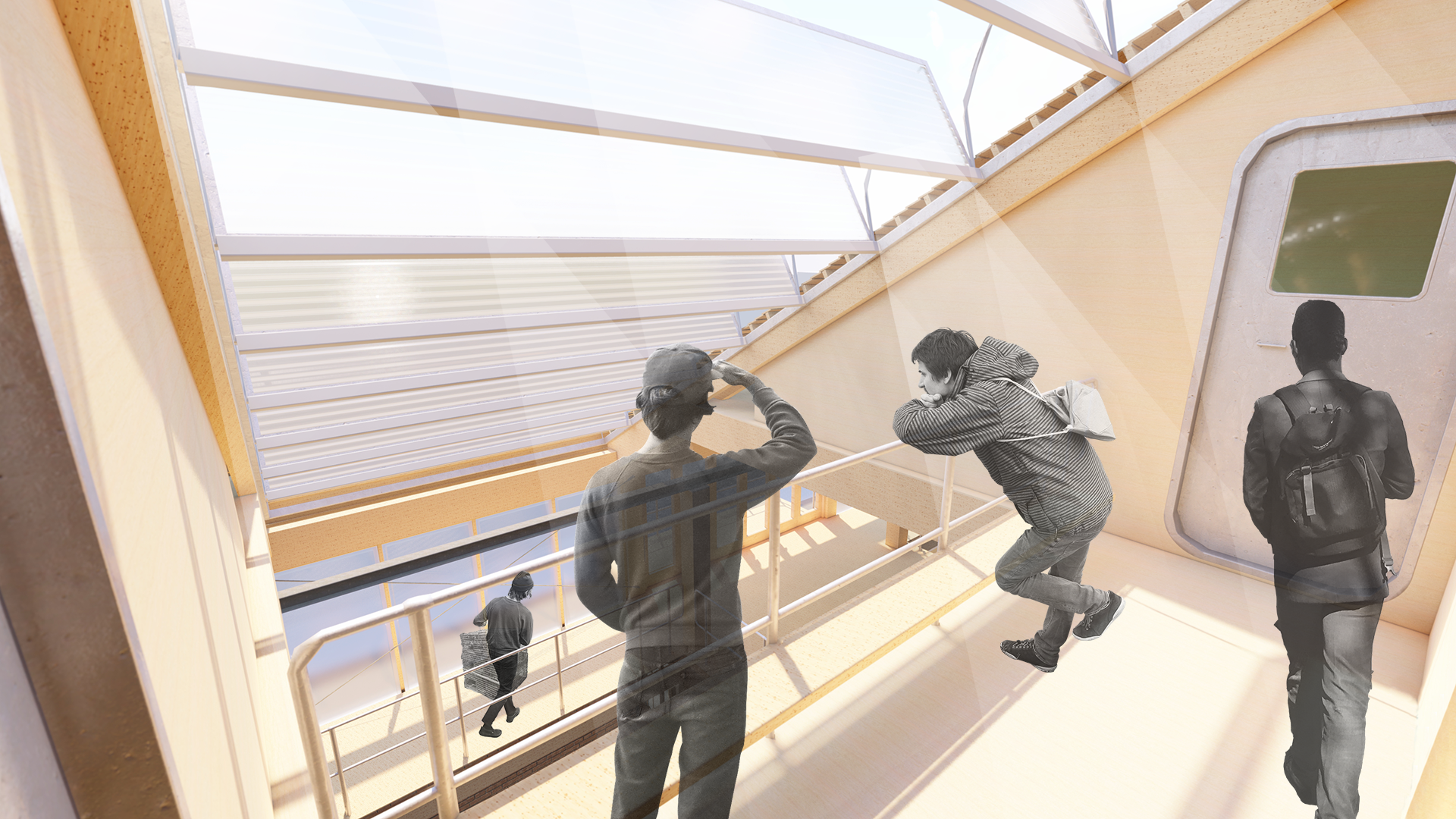
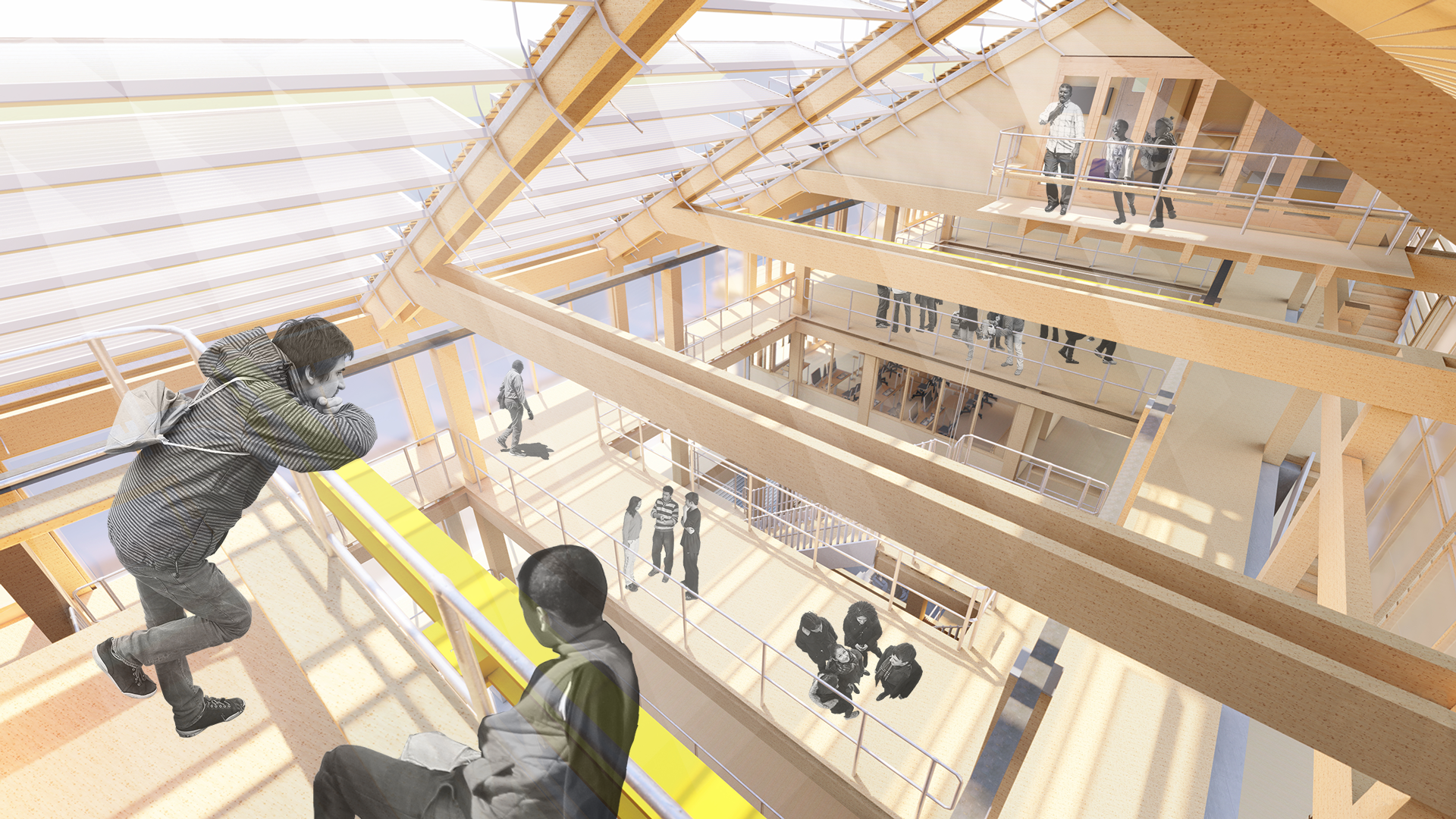
The result is a mixed use boatbuilding and training academy, and community centre built using these skills and material networks, and able to to be continually adapted in the future with the use of a Building Manual which outlines processes for making building components.
Understanding Local Crafts and Skills
Various mapping exercises and walkabouts were done in order to understand the natures of the skills and crafts that exist in Hout Bay Harbour and Hangberg.
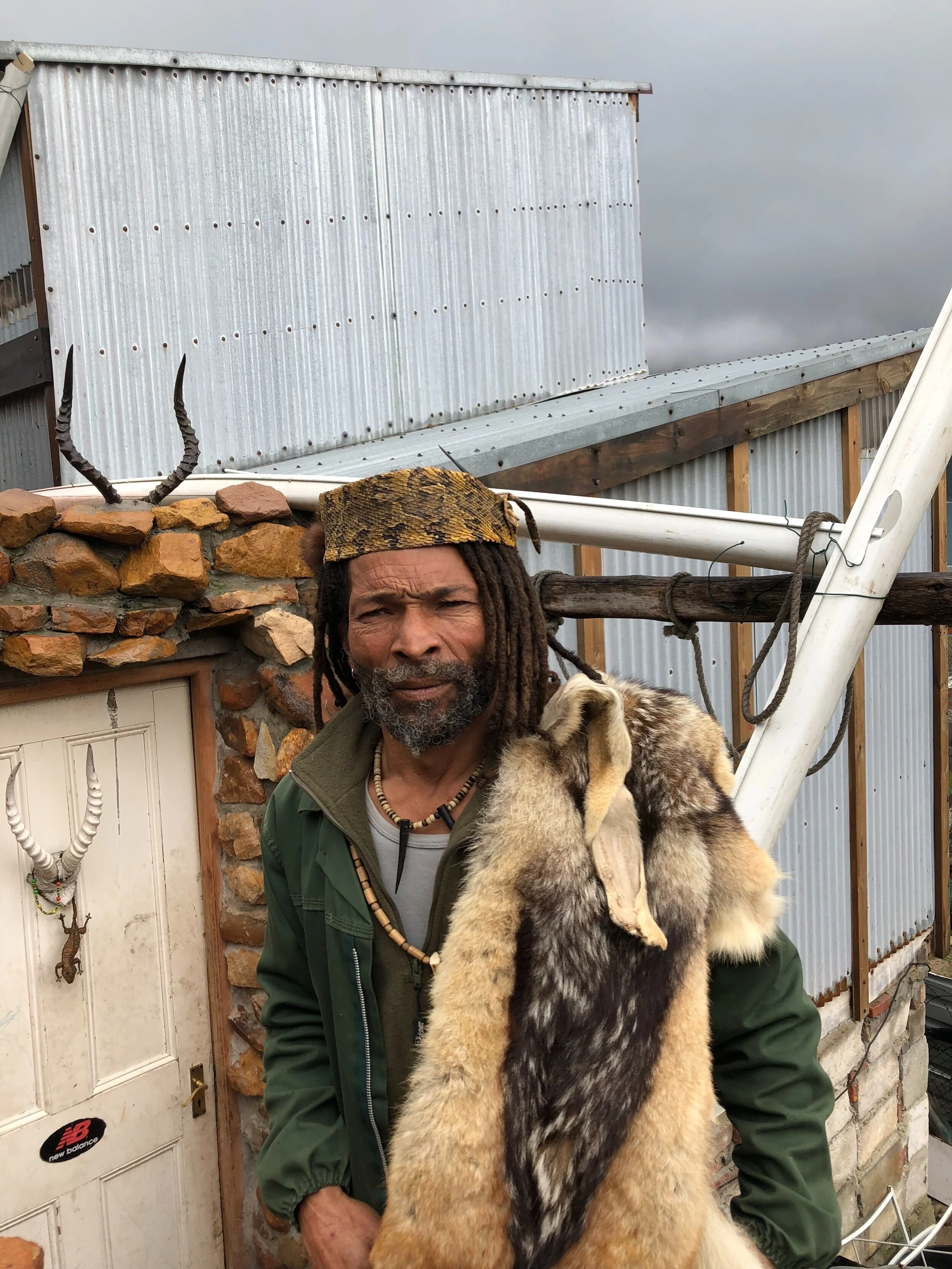
Xoma Aob, a self-builder in Hangberg
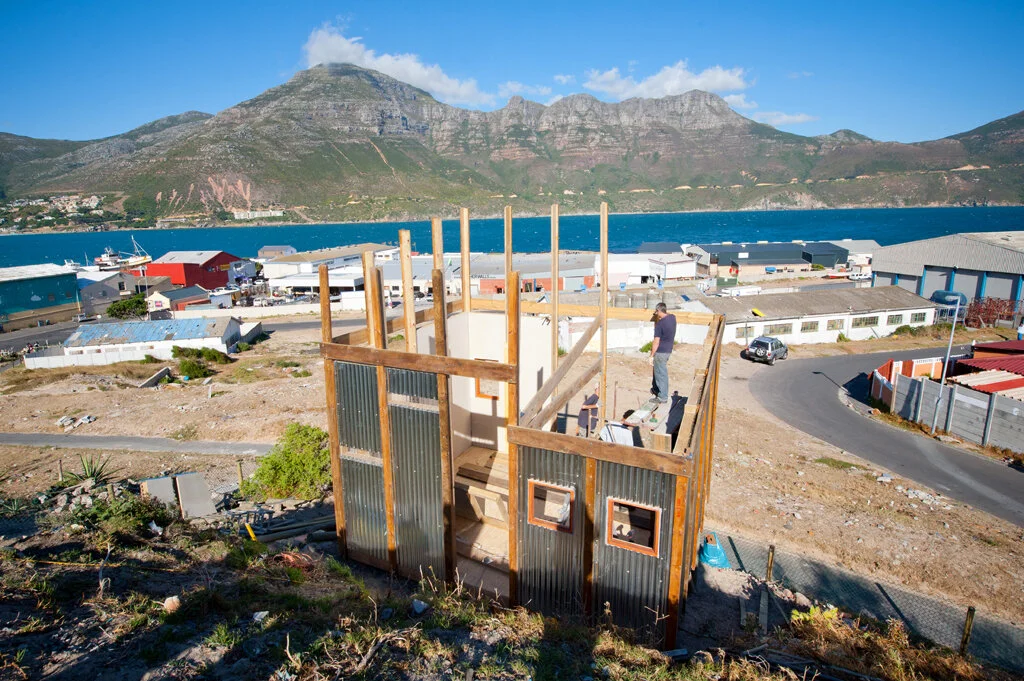
Xoma's house under construction, using recycled building material
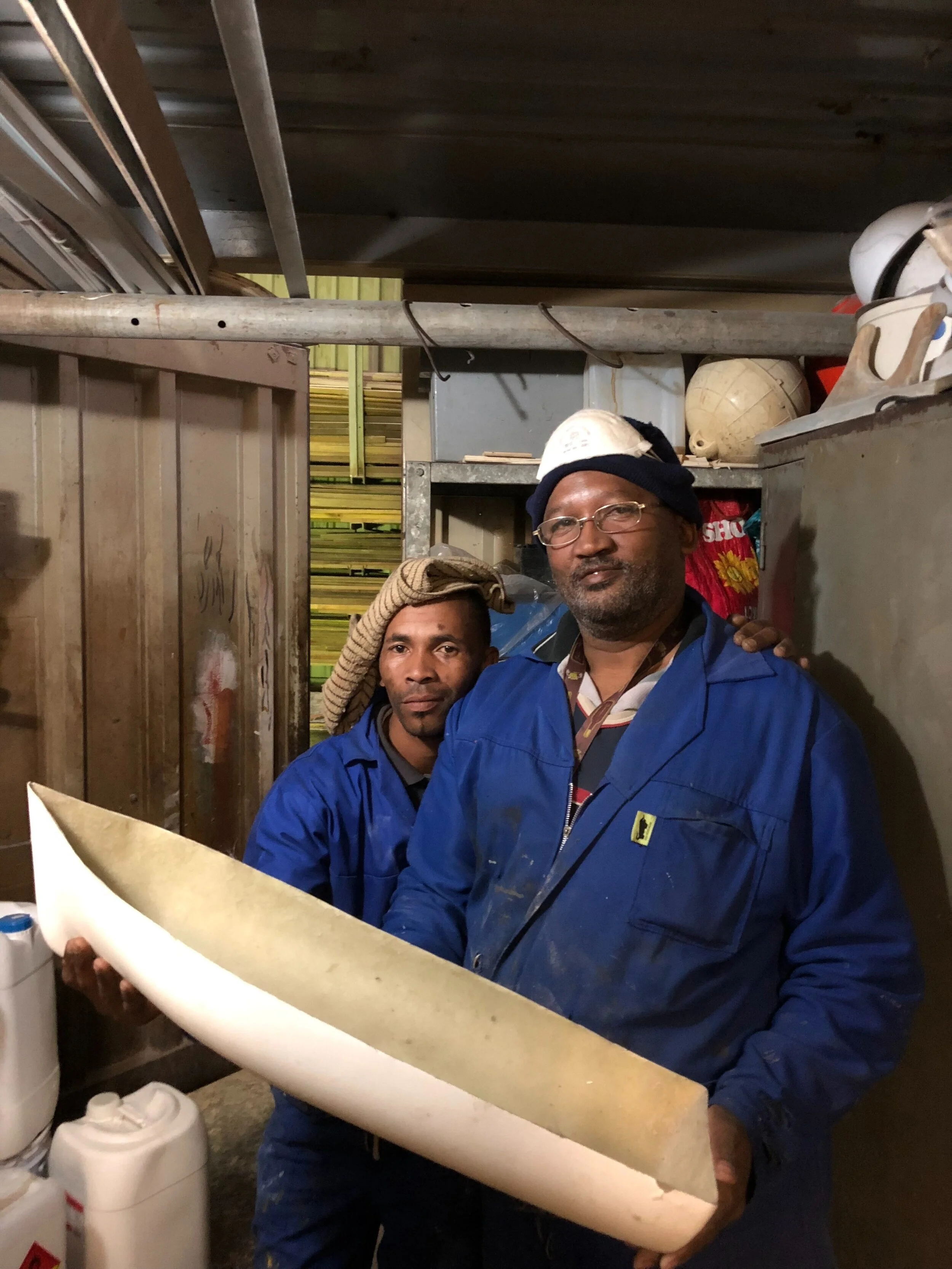
Keith Fisher, a fiberglass boatbuilder
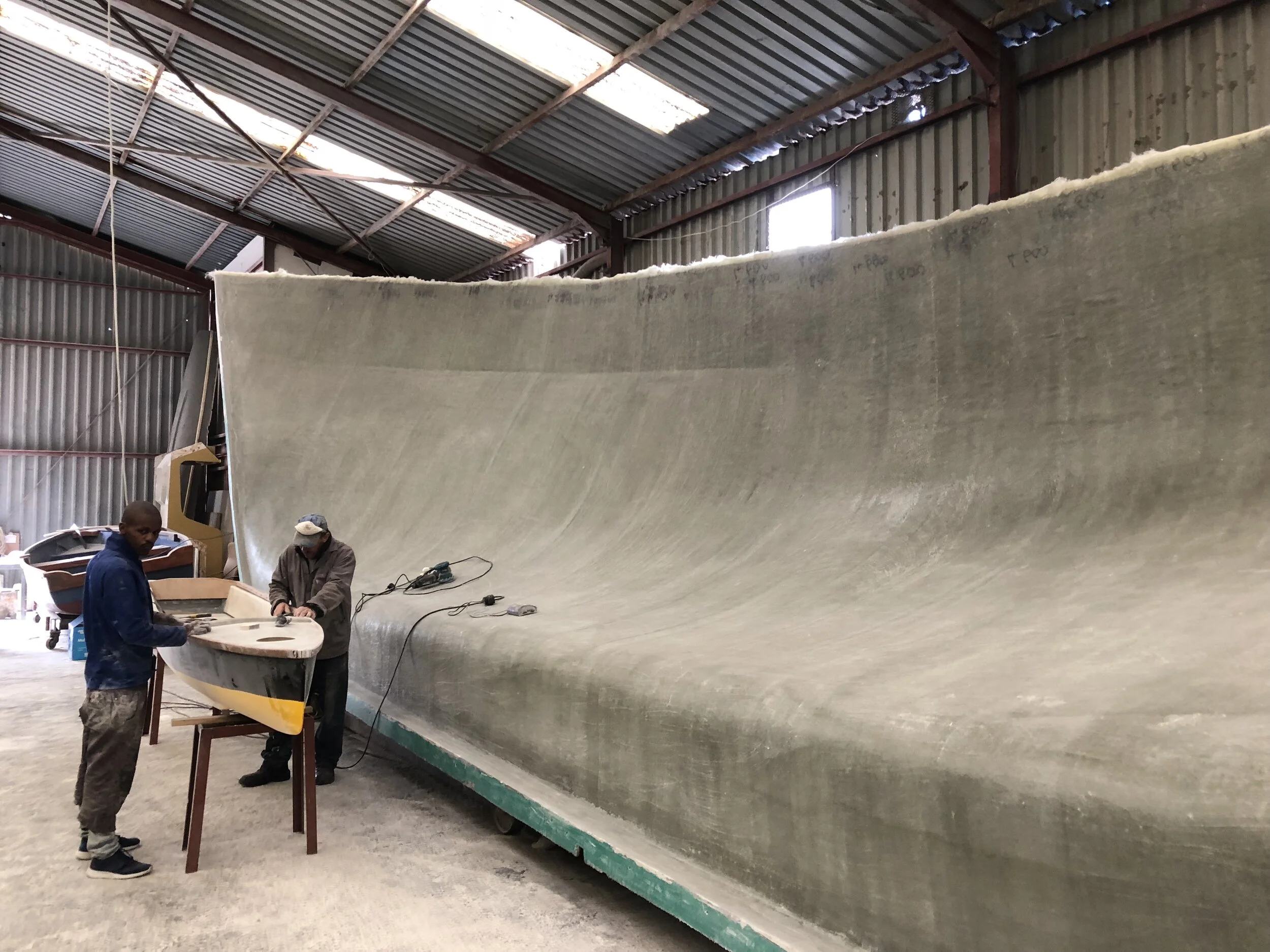
One of the hull's in Keith's workshop
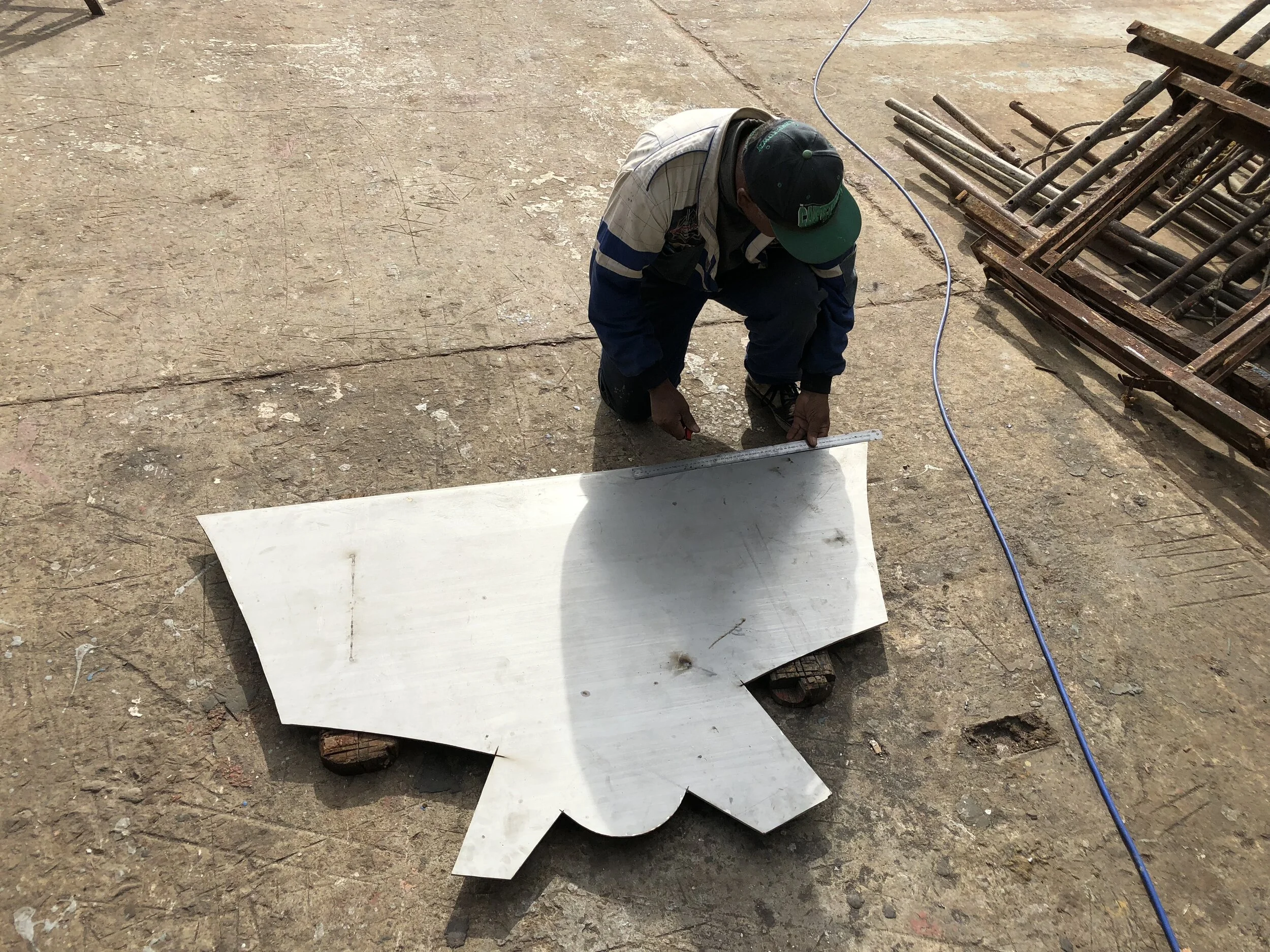
Repairs being made to a steel hull section
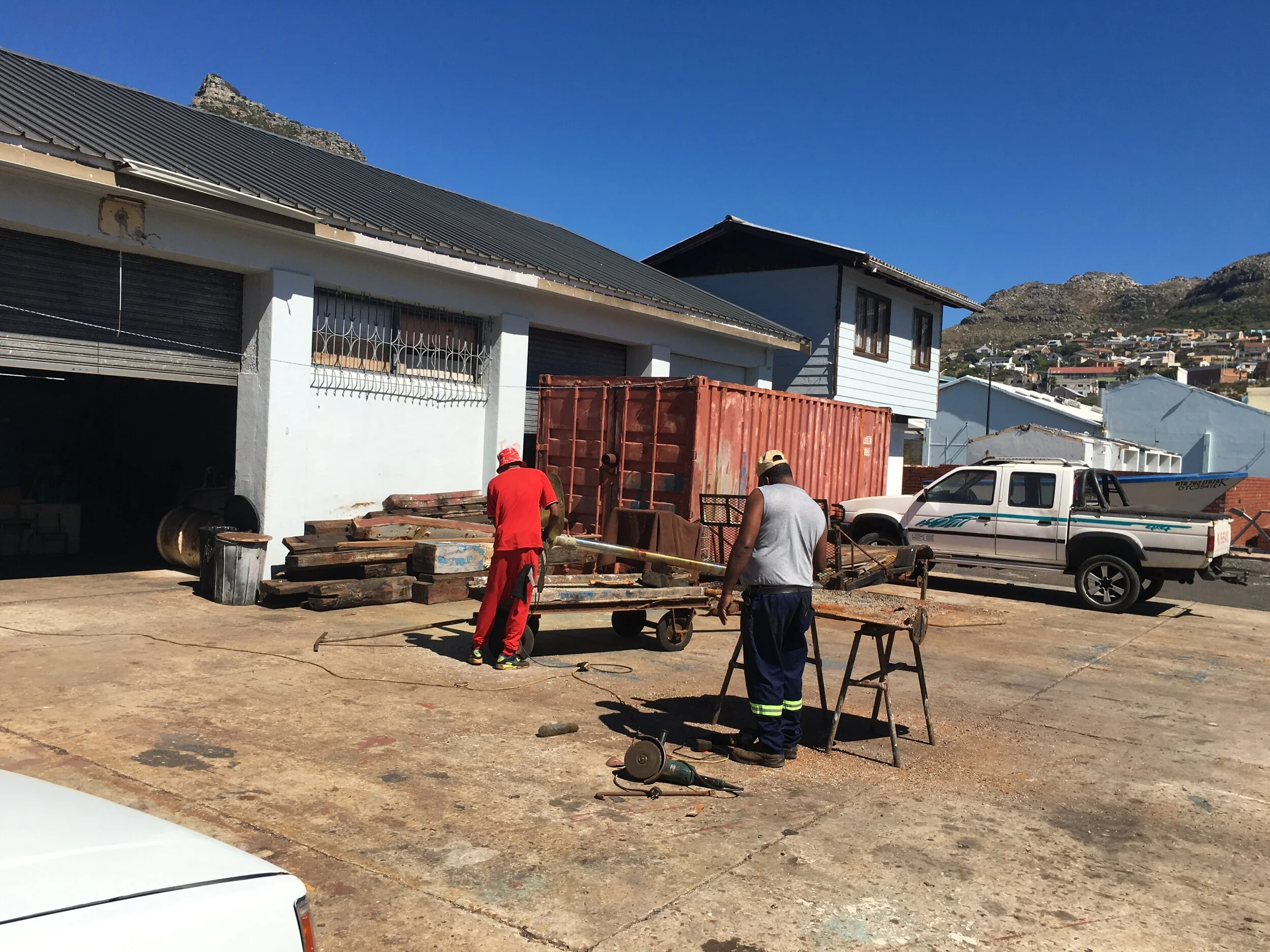
Maintenance work being done to a propeller shaft on the waterfront
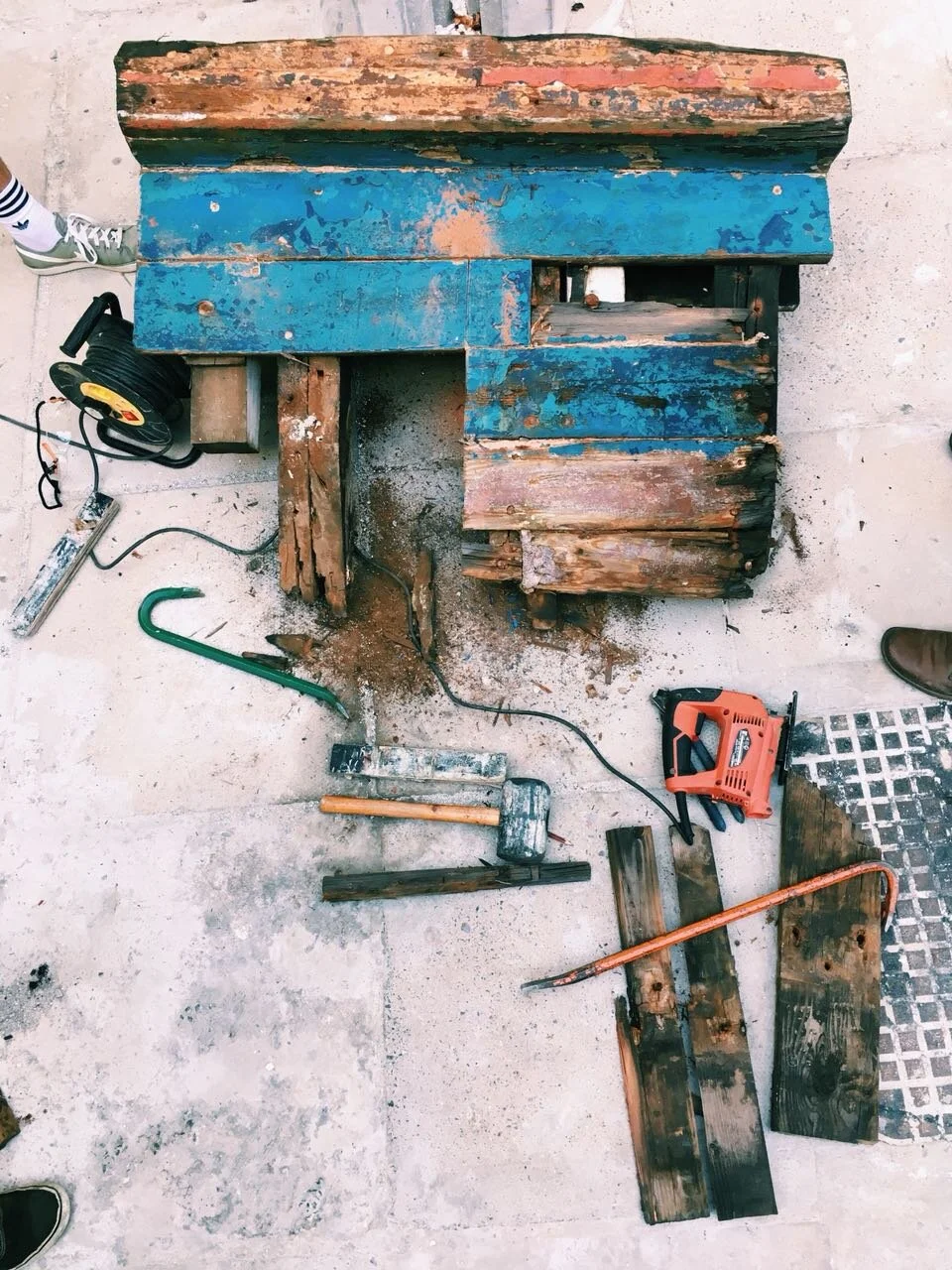
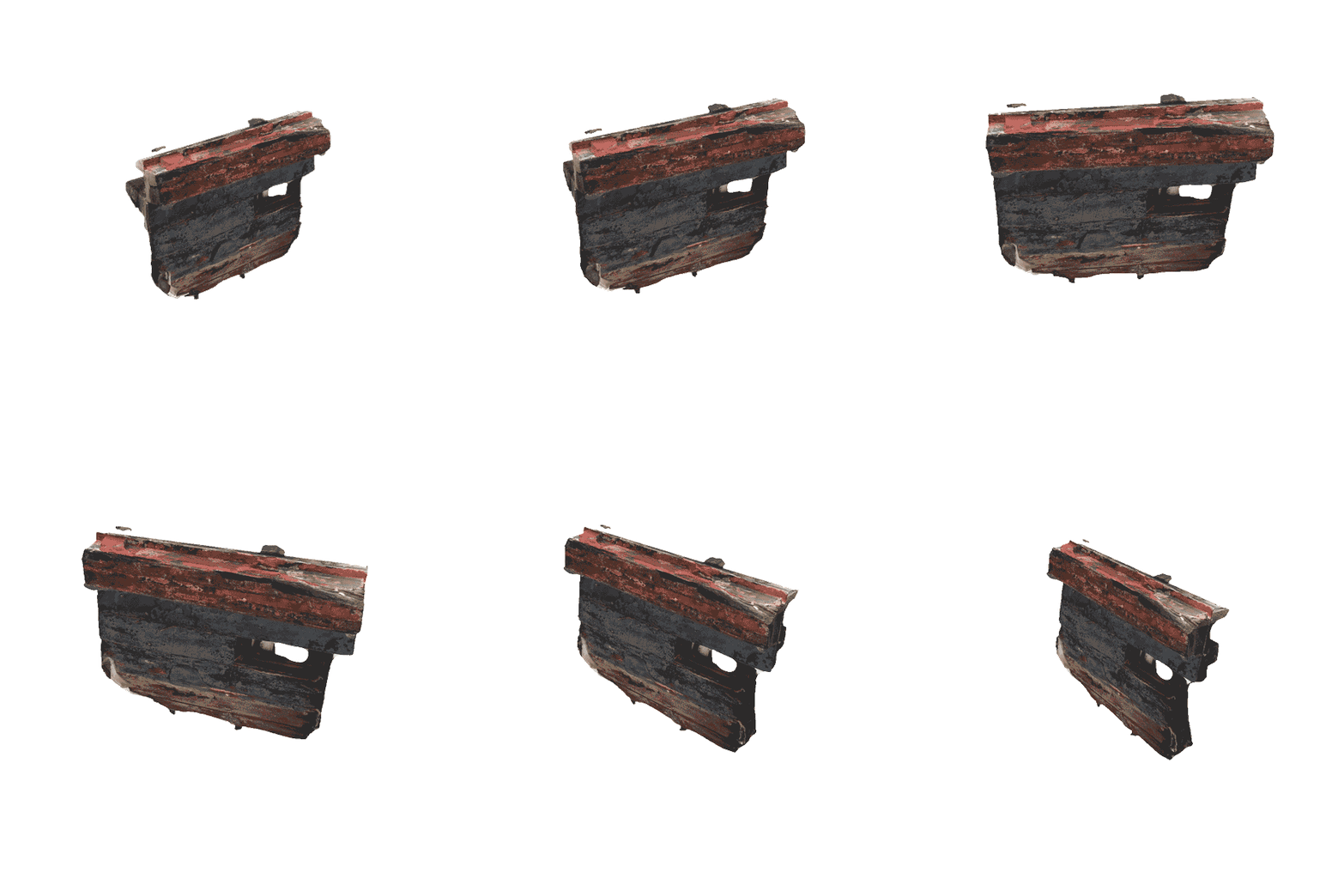
A hull segment obtained from the harbour and dismantled to reveal it’s construction. A 3D scan was used to record it’s found state.

Identifying the Site
The site chosen to adapt was a underutilised fishmeal warehouse built in the 1950s. Fishmeal is a by-product of the commercial fishing industry and is used primarily as battery chicken feed.
The building itself is 100m long and physically separates the community of Hangberg from the sea.
It’s regular structural logic leant itself to the notion that multiple adaptations could be carried out with it in the future.
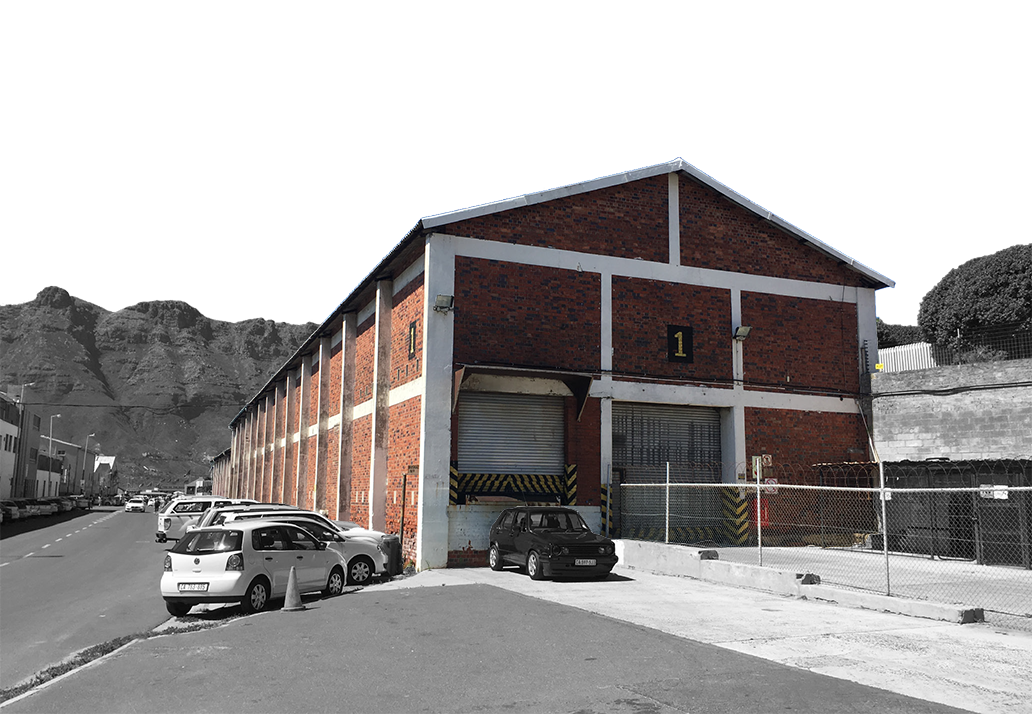
The chosen building as photographed in 2019
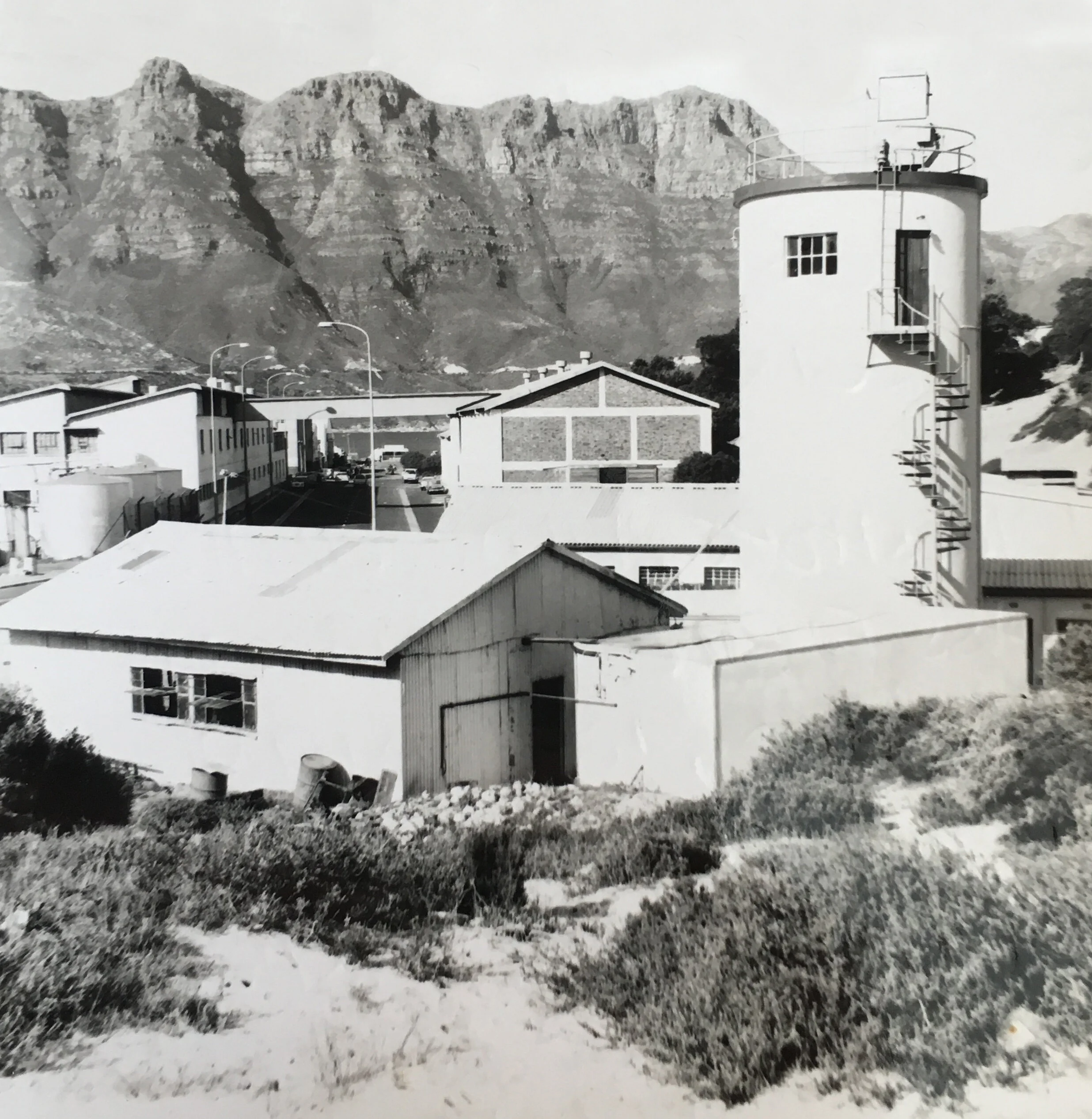
The chosen building as photographed in 1958
Architectural Response
The response to the conditions found in the harbour and Hangberg consist of an urban link, reconnecting the community with the sea, ways in which the adaptation of the building responds to its parameters, and how its programming, structural logic, spatial arrangements and materiality contribute to it being adaptable in the future.
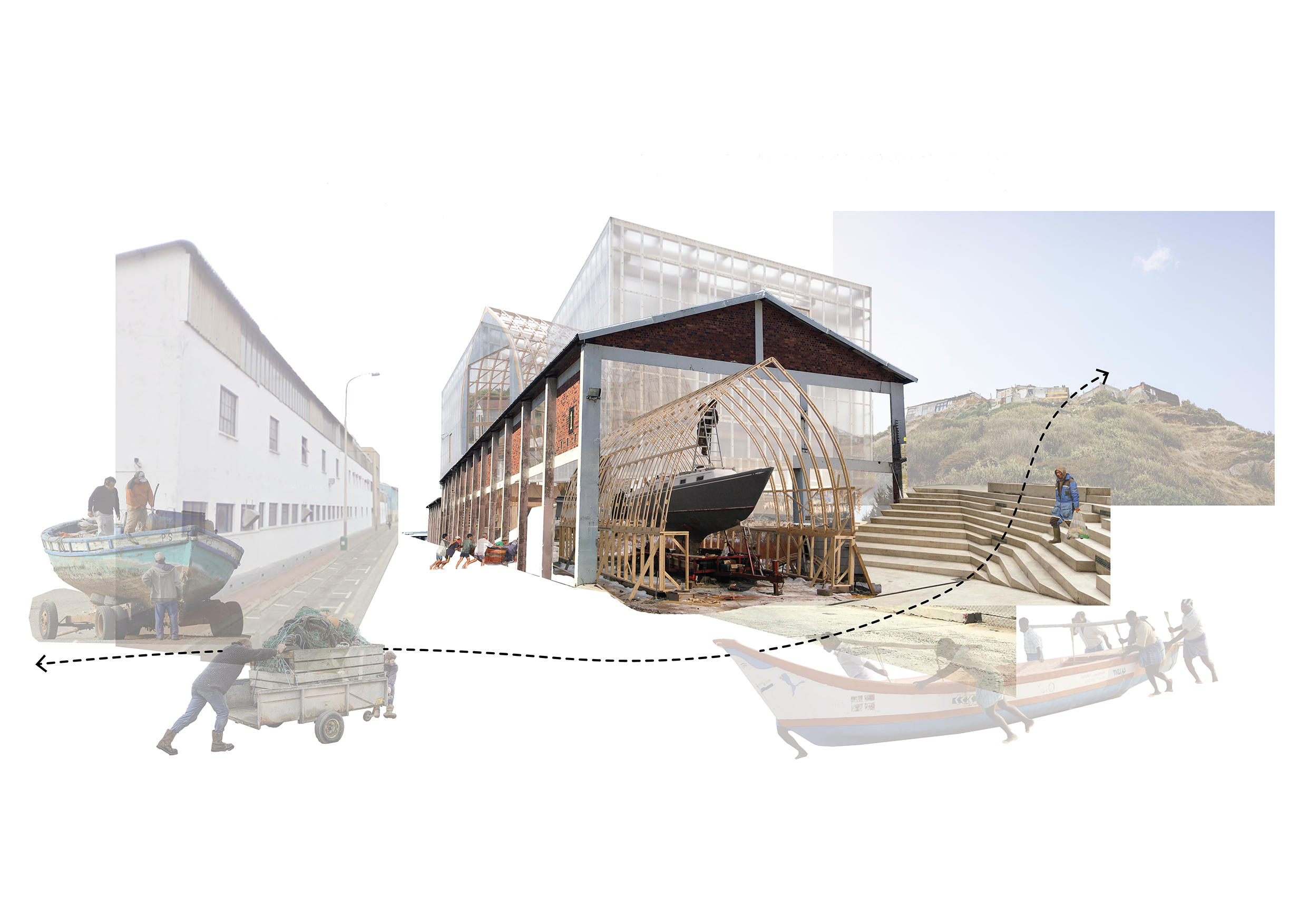
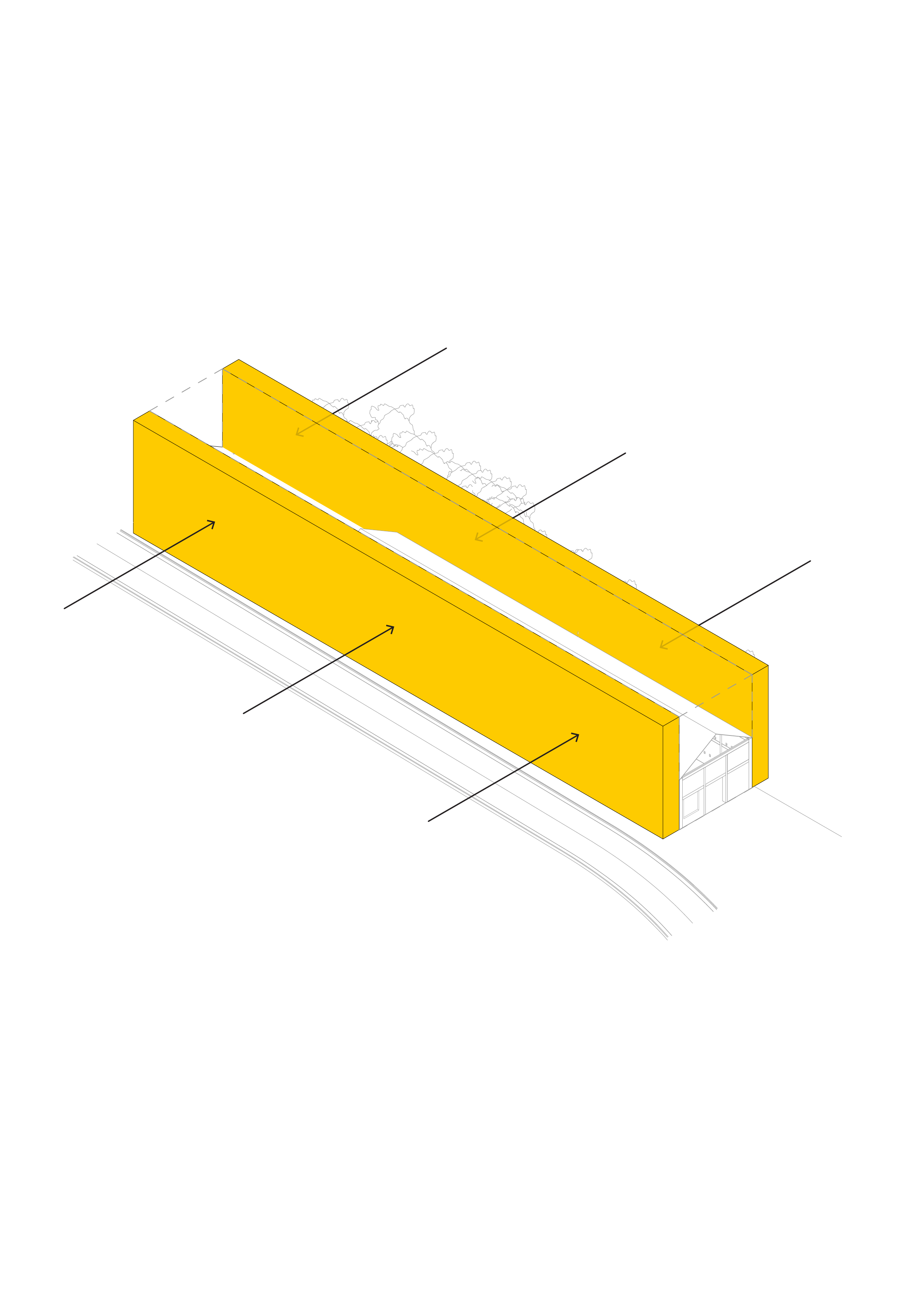
Site constrained by busy Harbour Road and protected milkwoods
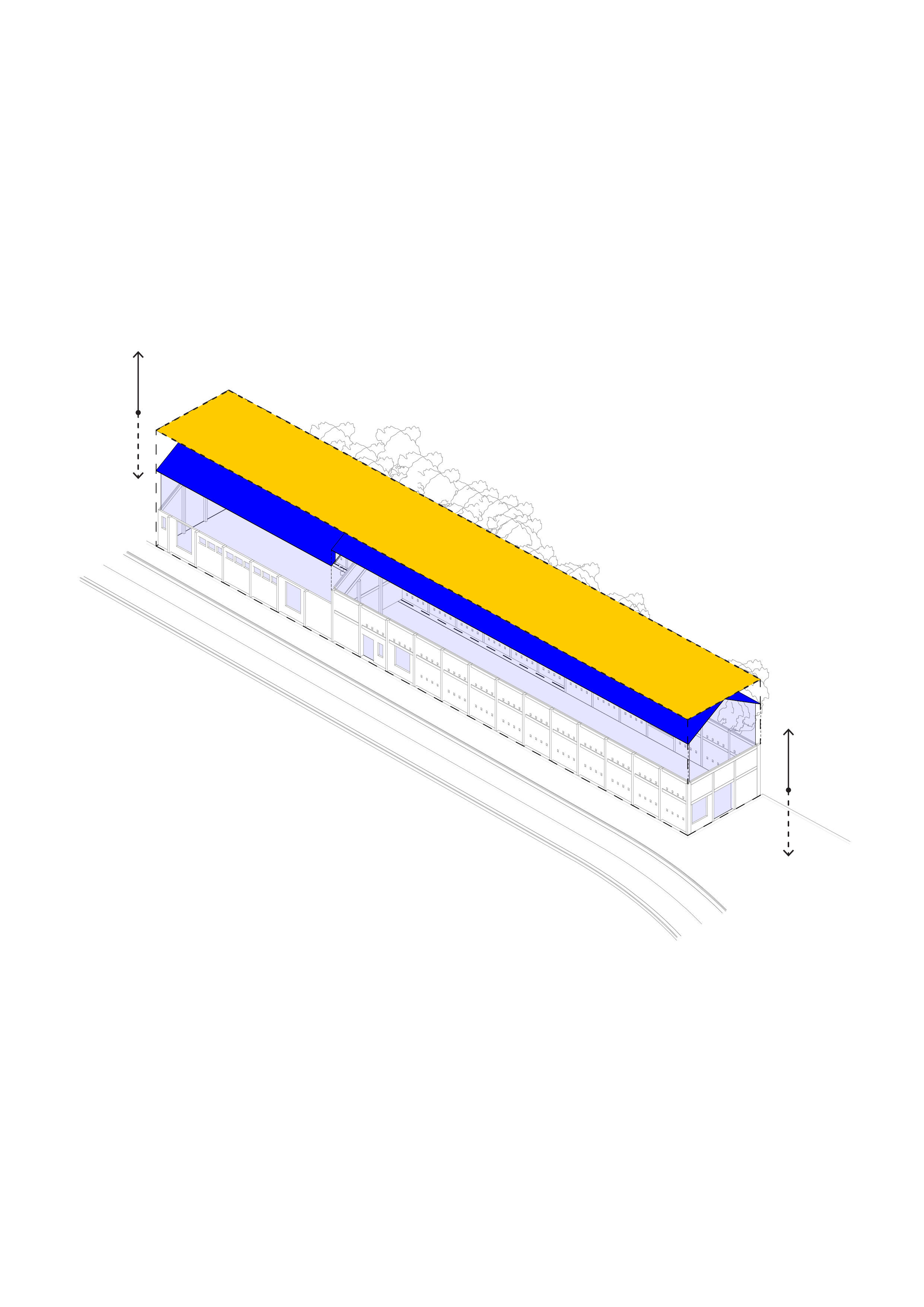
Height restriction of 18m
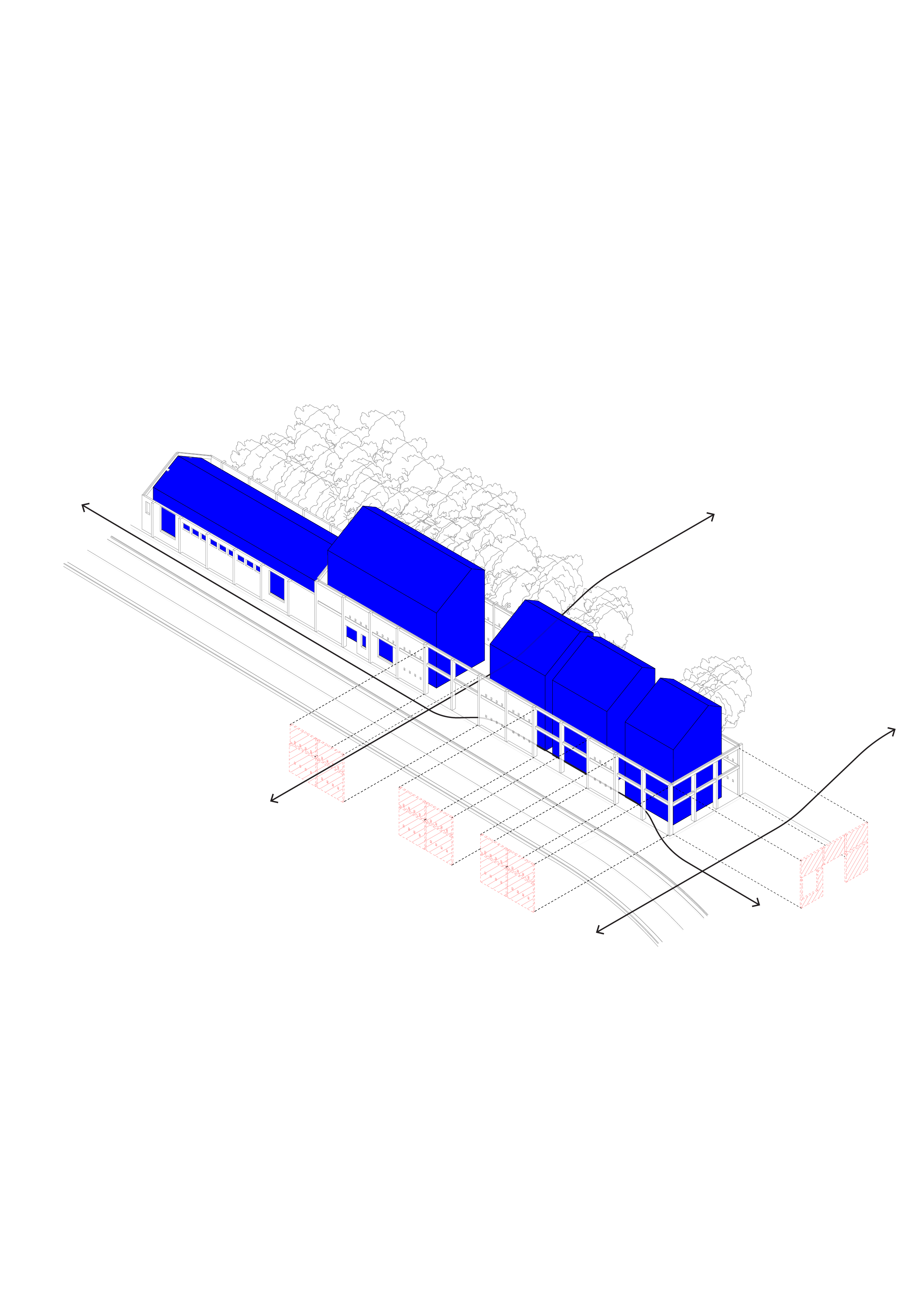
Height is mitigated and building is permeated
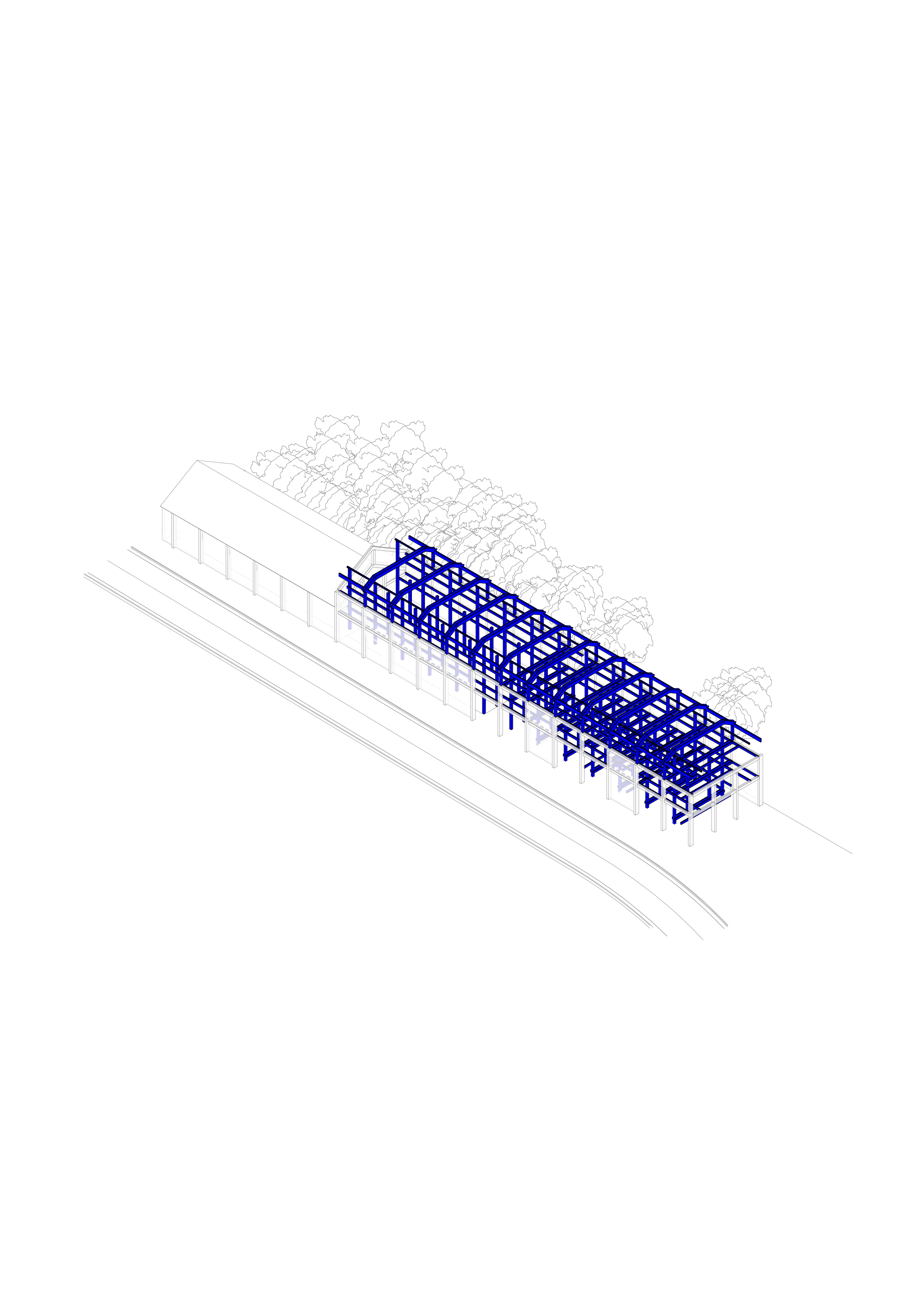
A new internal structural frame is employed
The existing building, and the intervention within it, compised of components from the Building Manual.
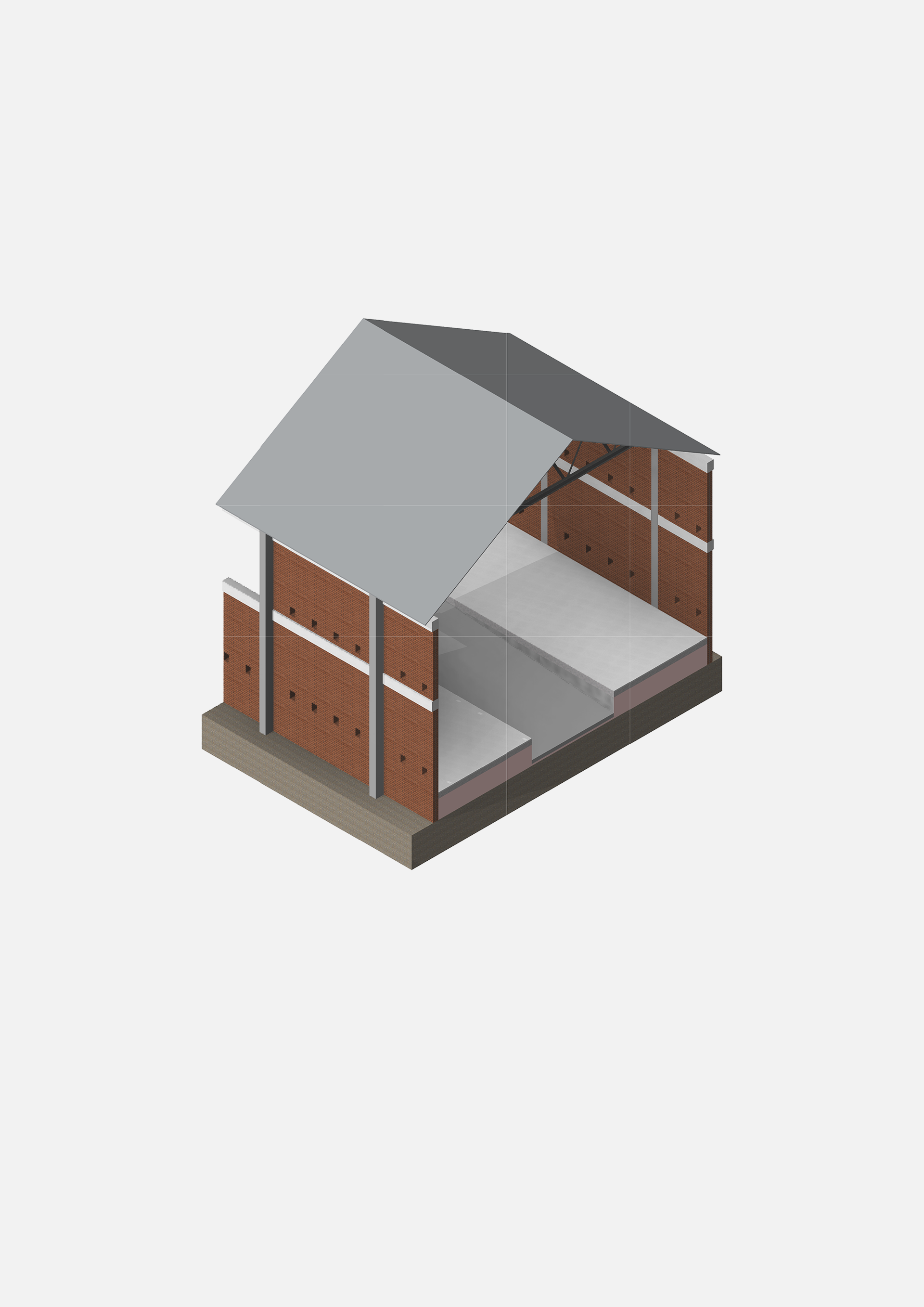
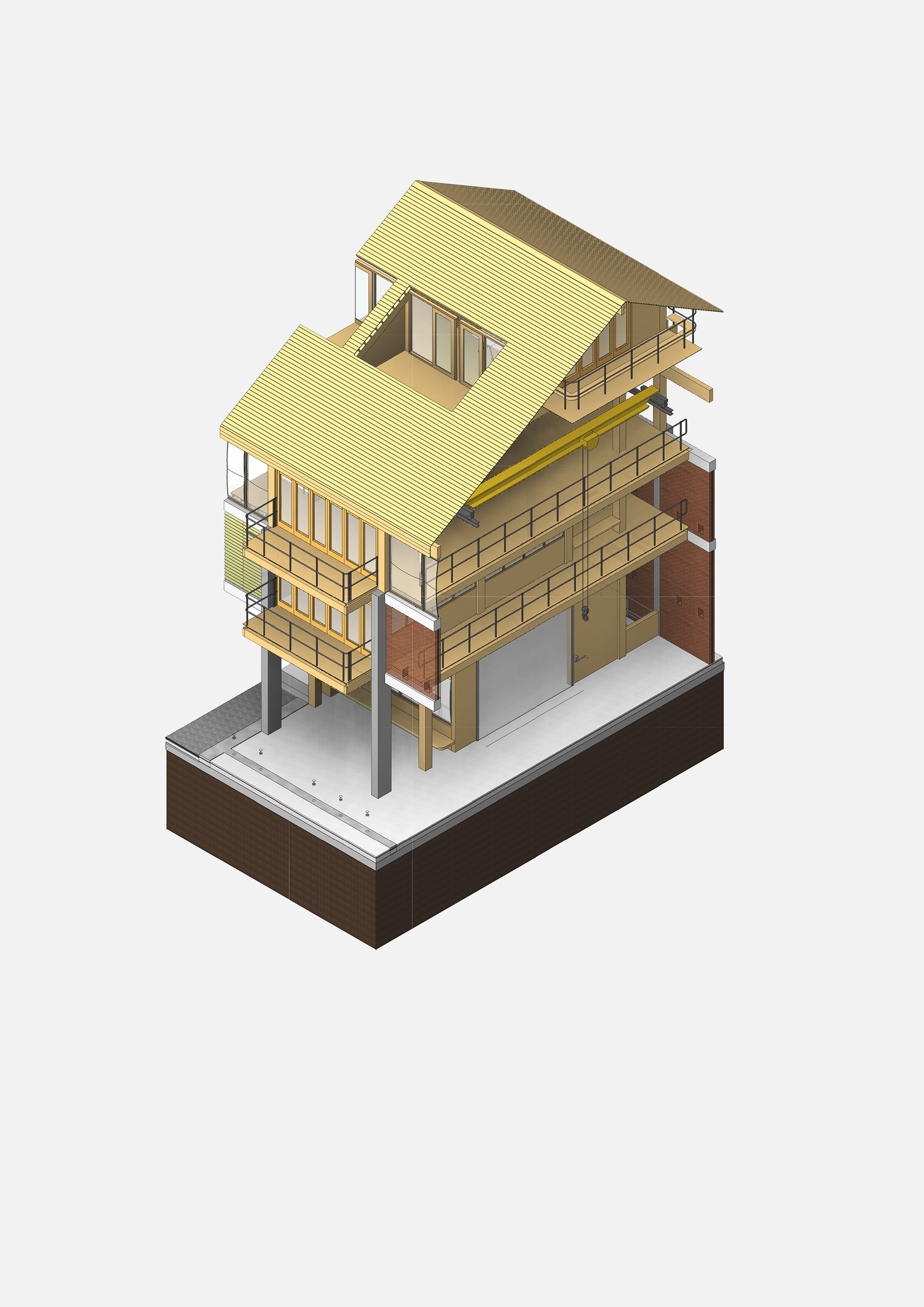
A Polyvalent Use of Space
To make the building as useful as possilbe to the community, it was important to understand how it’s spaces could be designed and used for multiple programmes at different times.
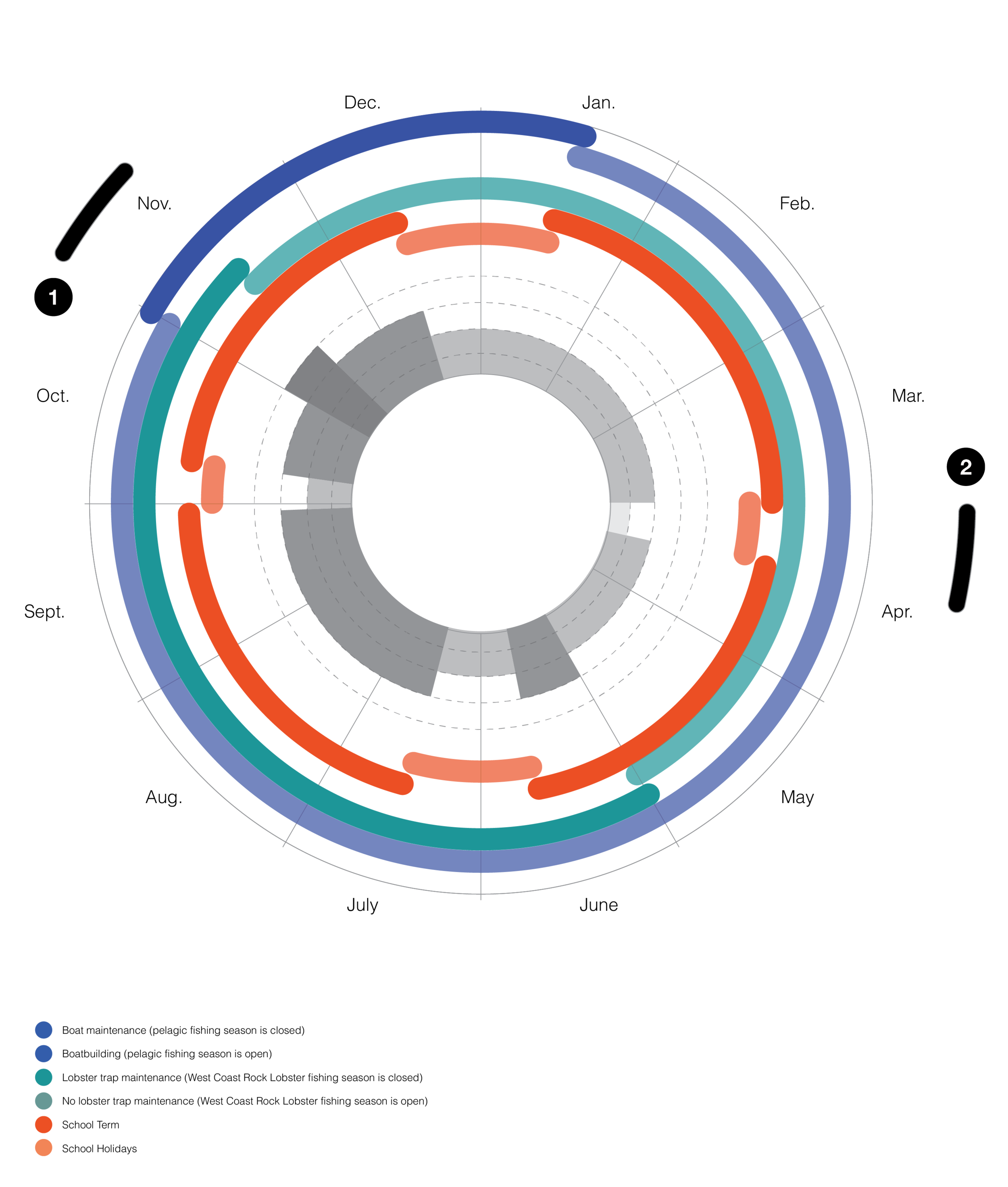
The times during which programmes need to overlap are when the building will be under the most pressure to be able to adapt and absorb those programmes efficiently.
Through consultation with community members, the following diagrams were produced to indicate the times during which programmes of the building are most likely to operate.
They are investigated according to three timescales: one year, one week and one day. The drawings and images following the diagrams are explorations into how these spaces might operate at the indicated times.
One Year
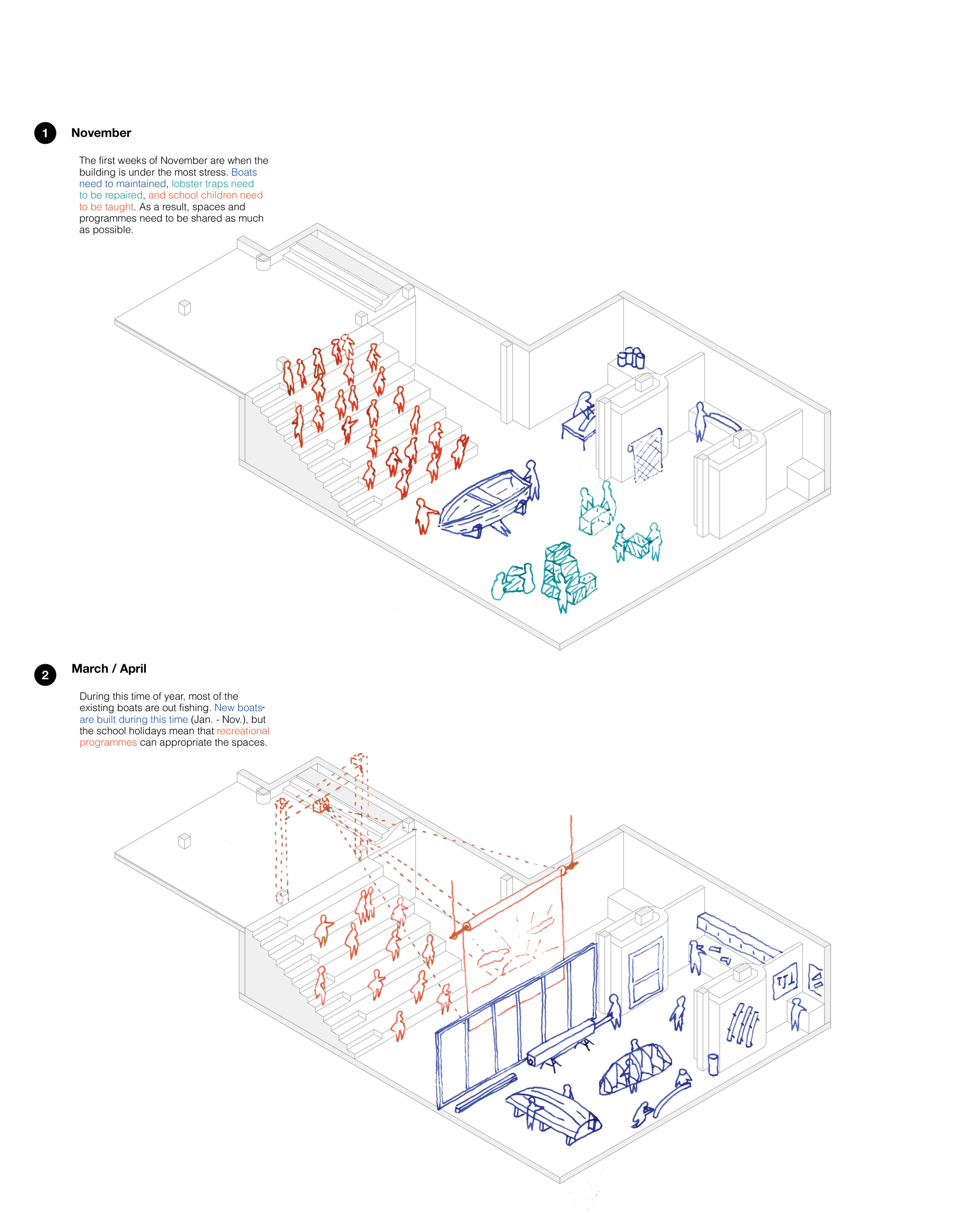
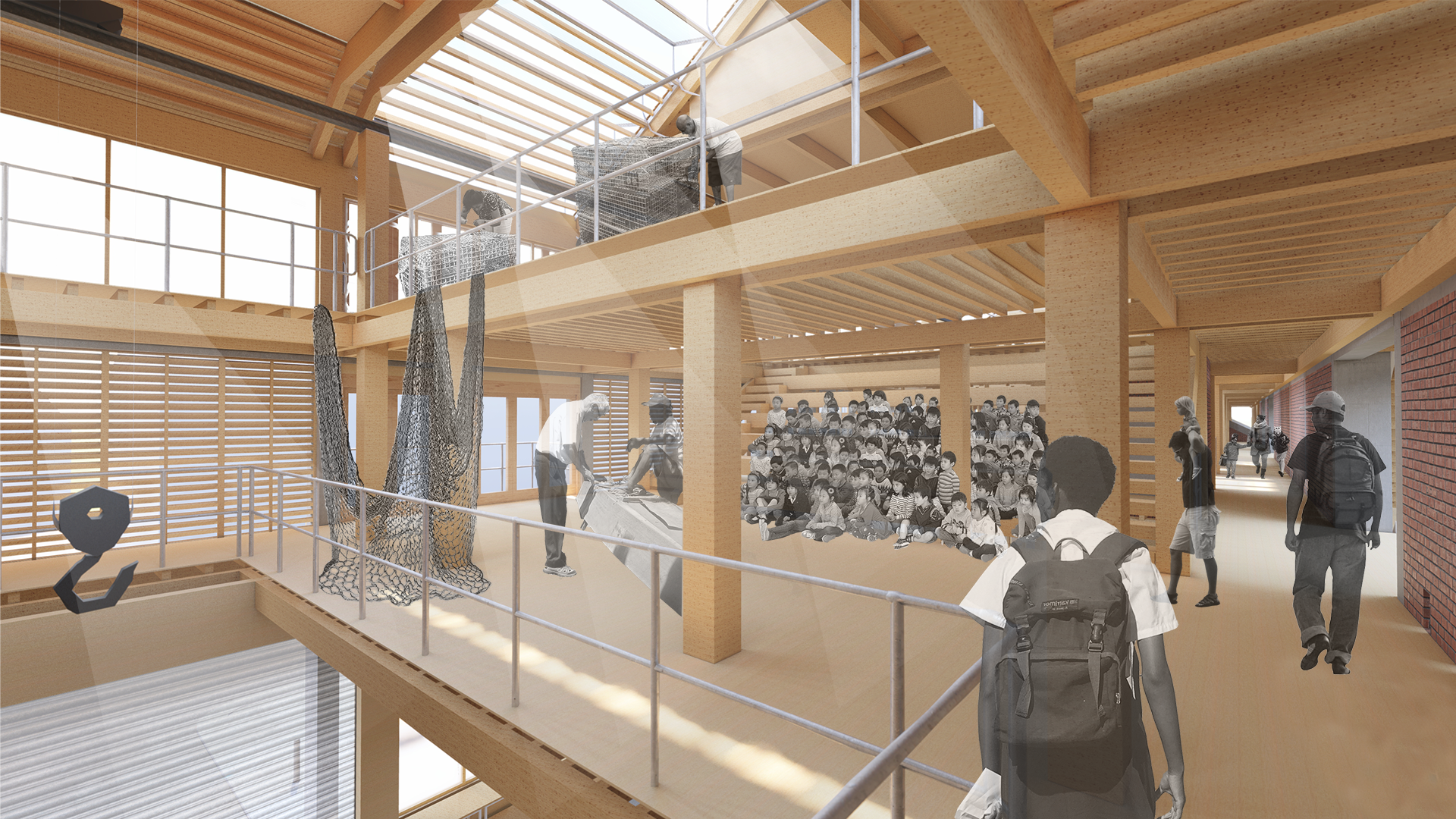
The amphitheatre in November being used for boat maintenance and training
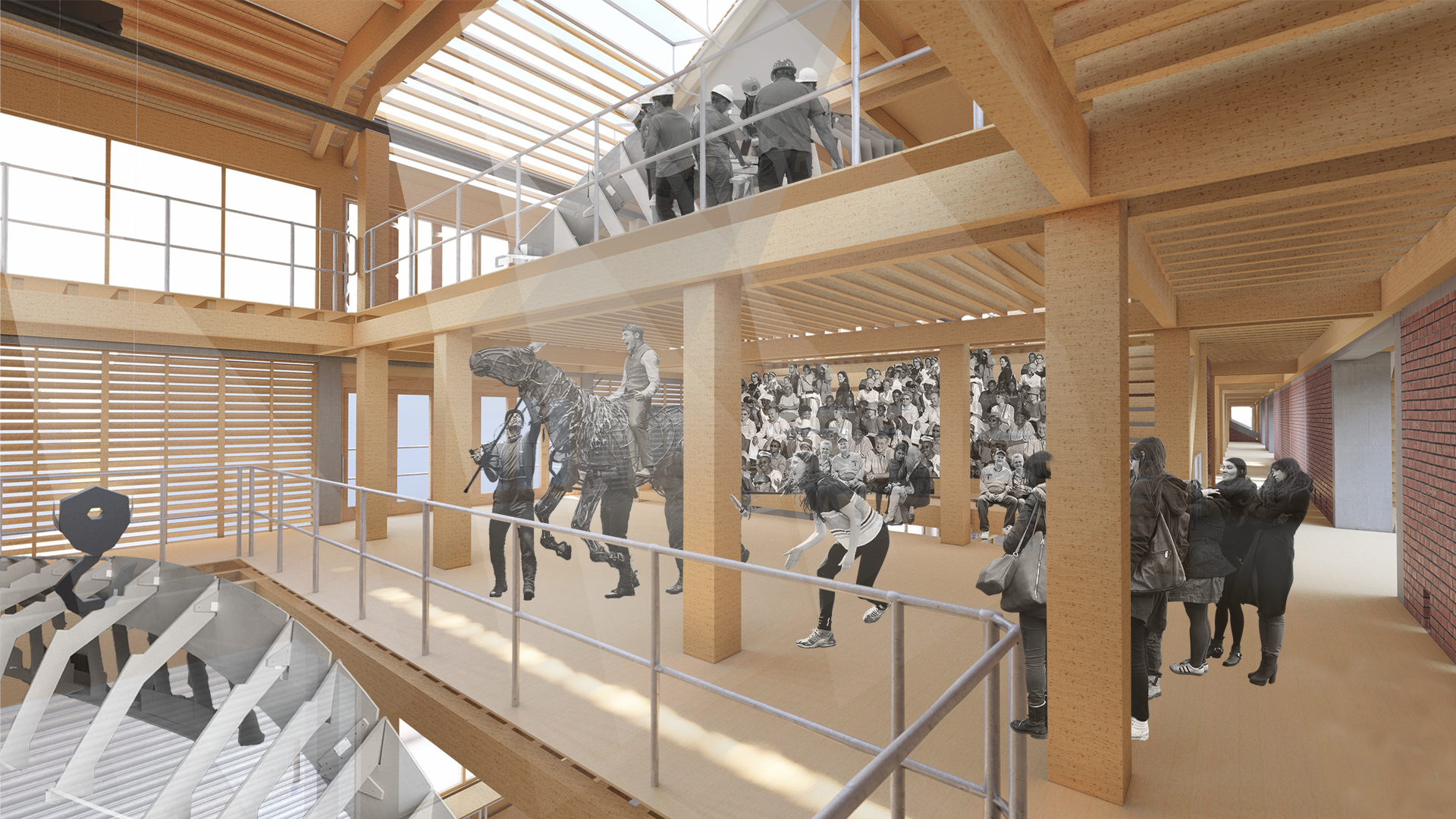
The amphitheatre in March being used for School Holiday activities
One Week

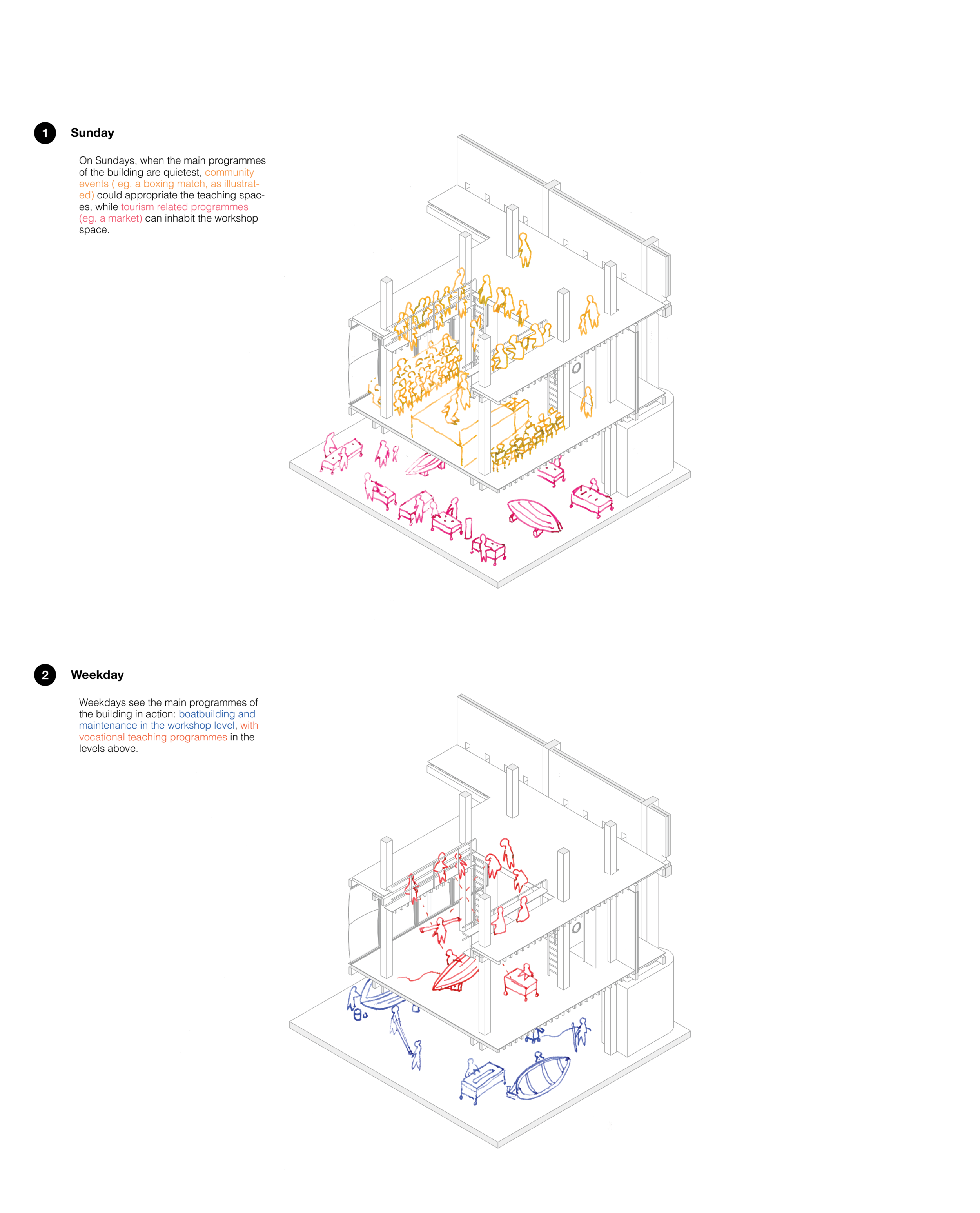
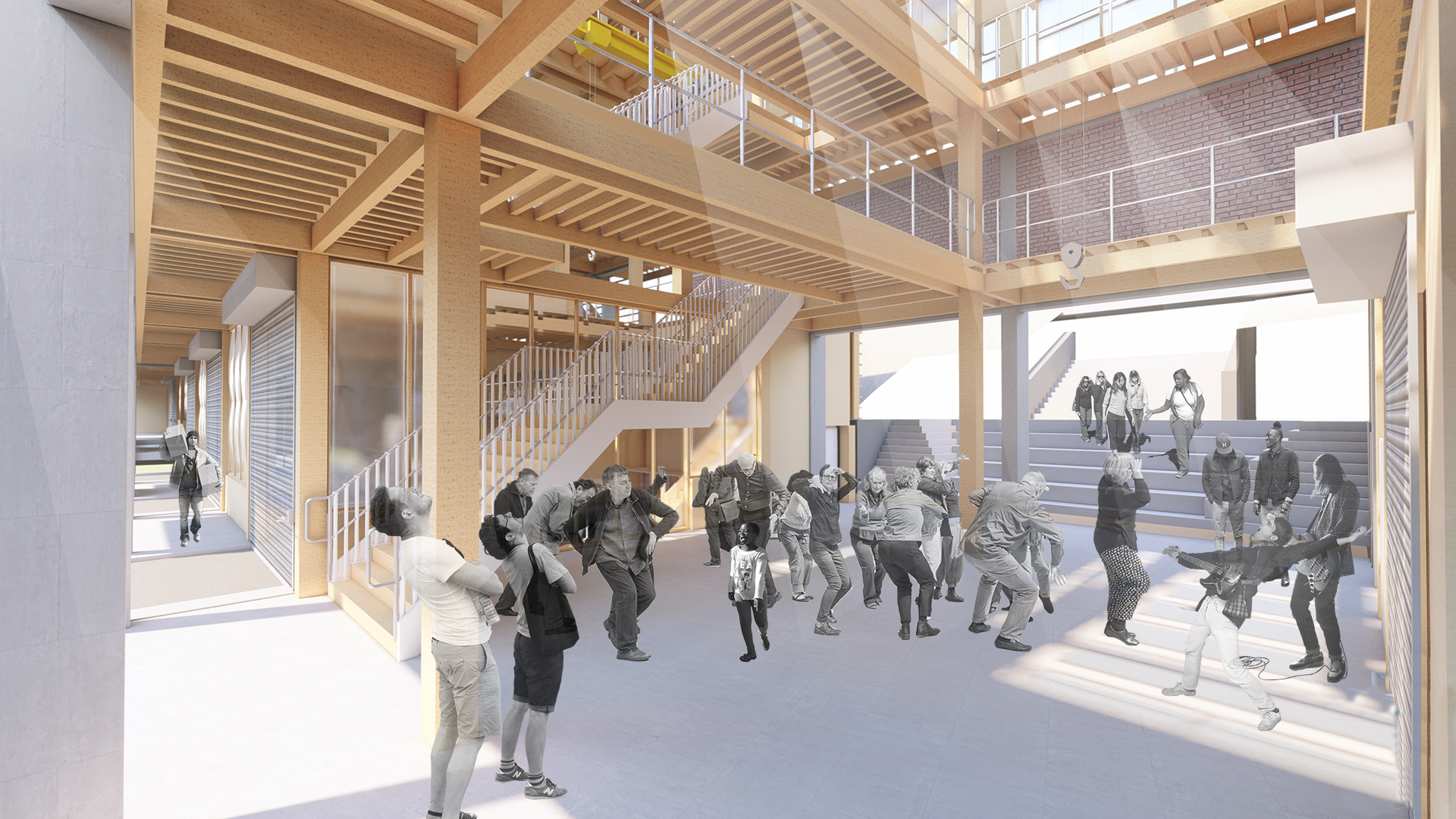
The foyer on the weekend being used for community gatherings and tourism purposes
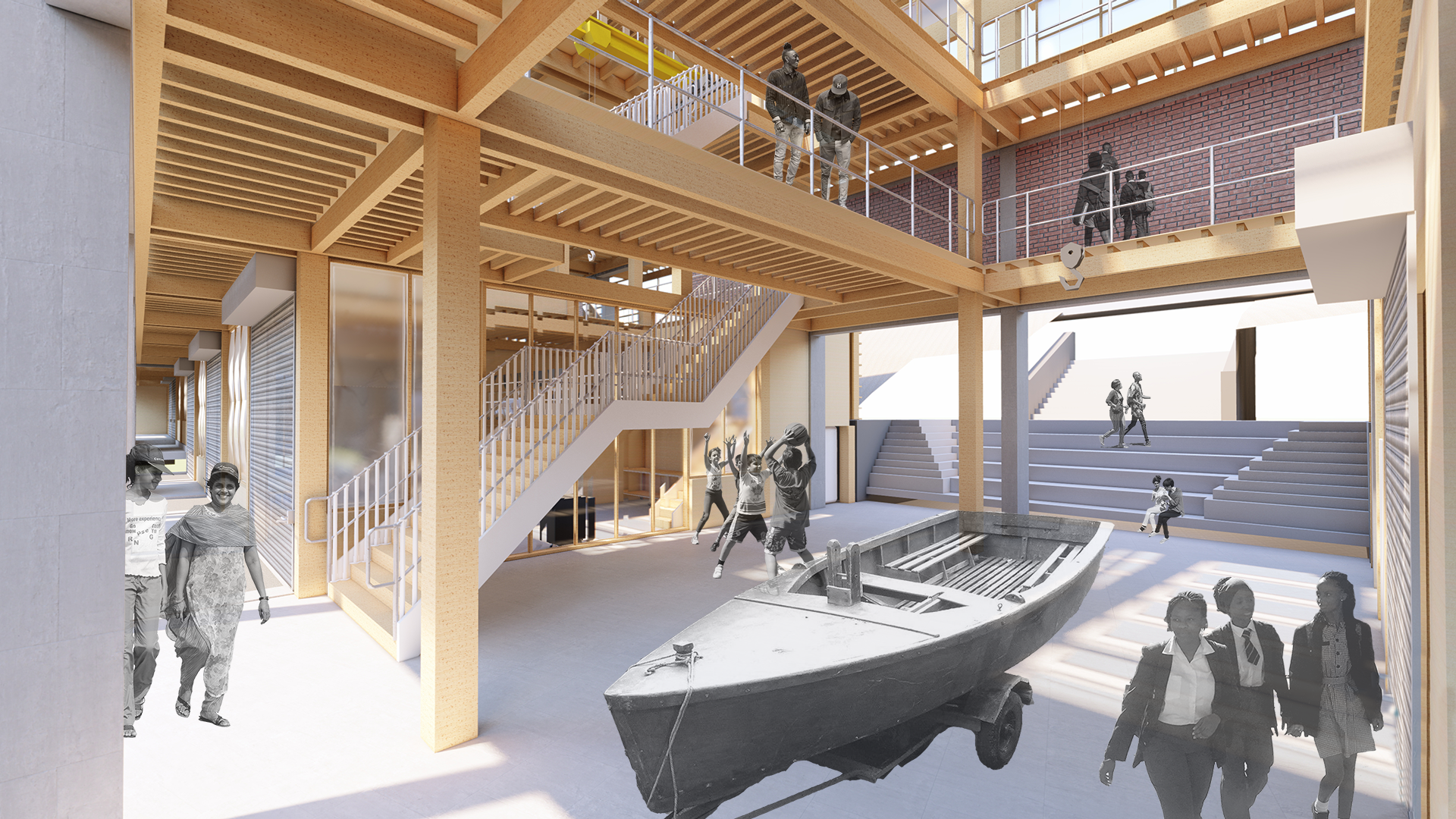
The foyer during the week being used for boatbuilding and maintenance, and extra-mural school programmes
One Day
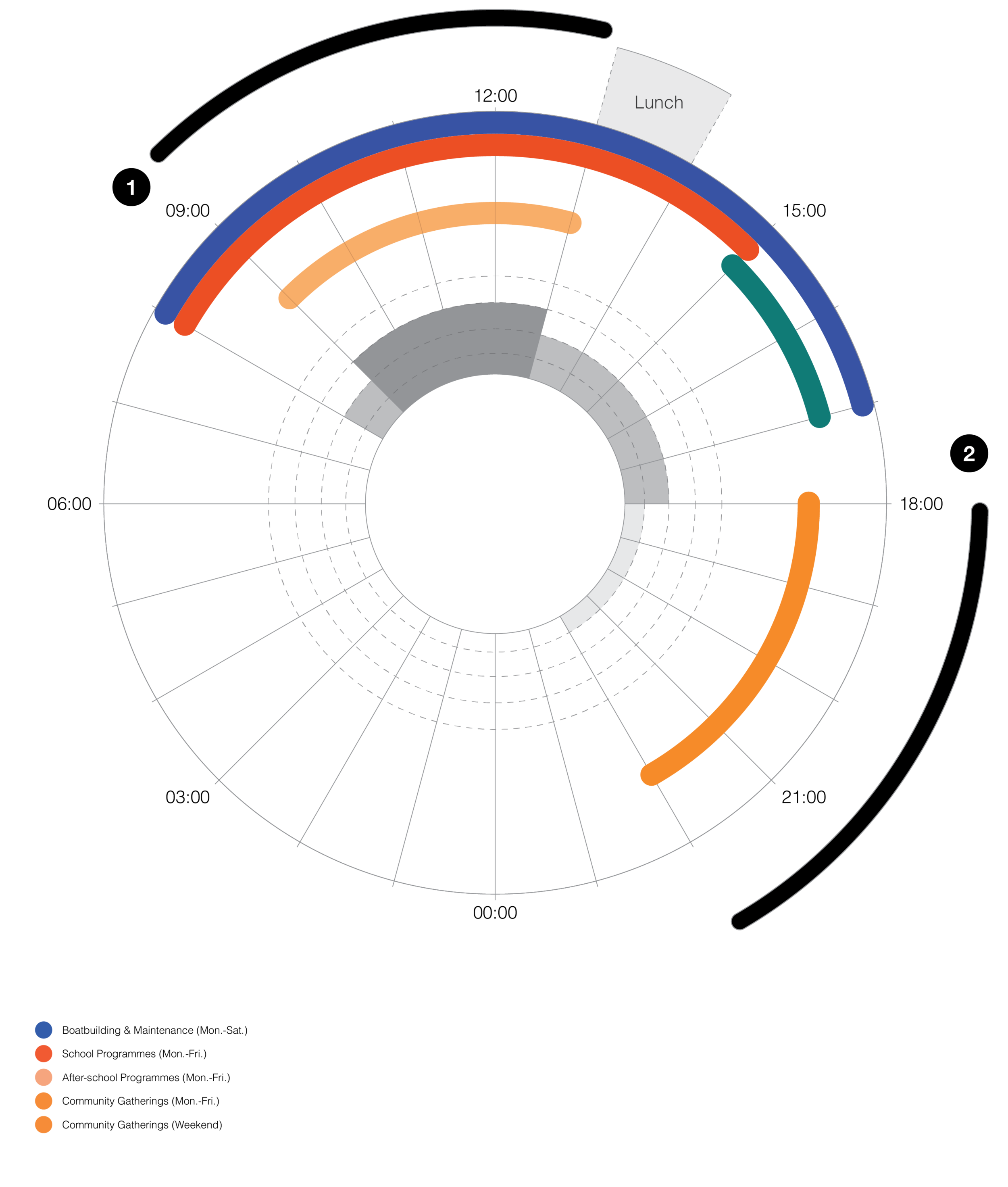
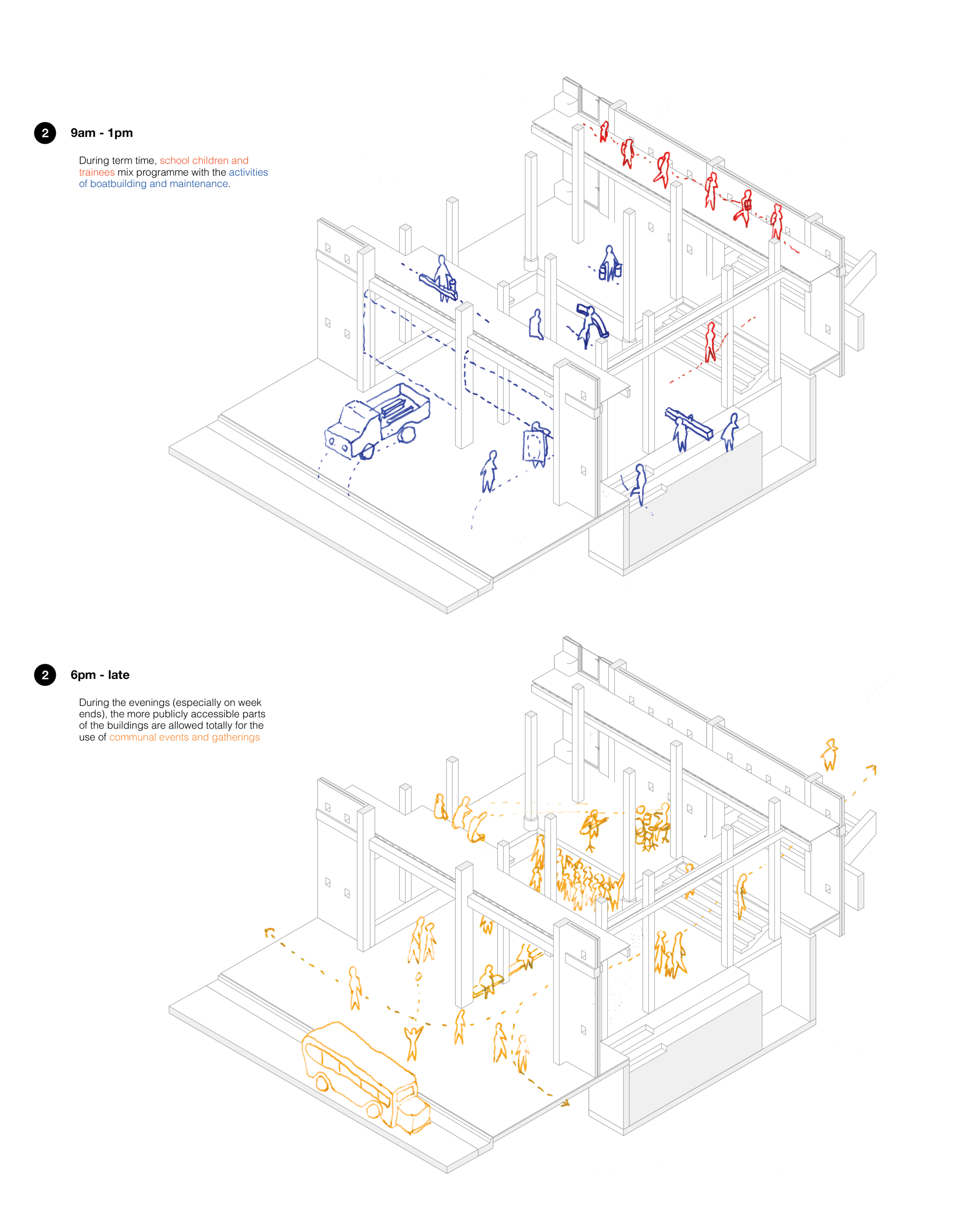
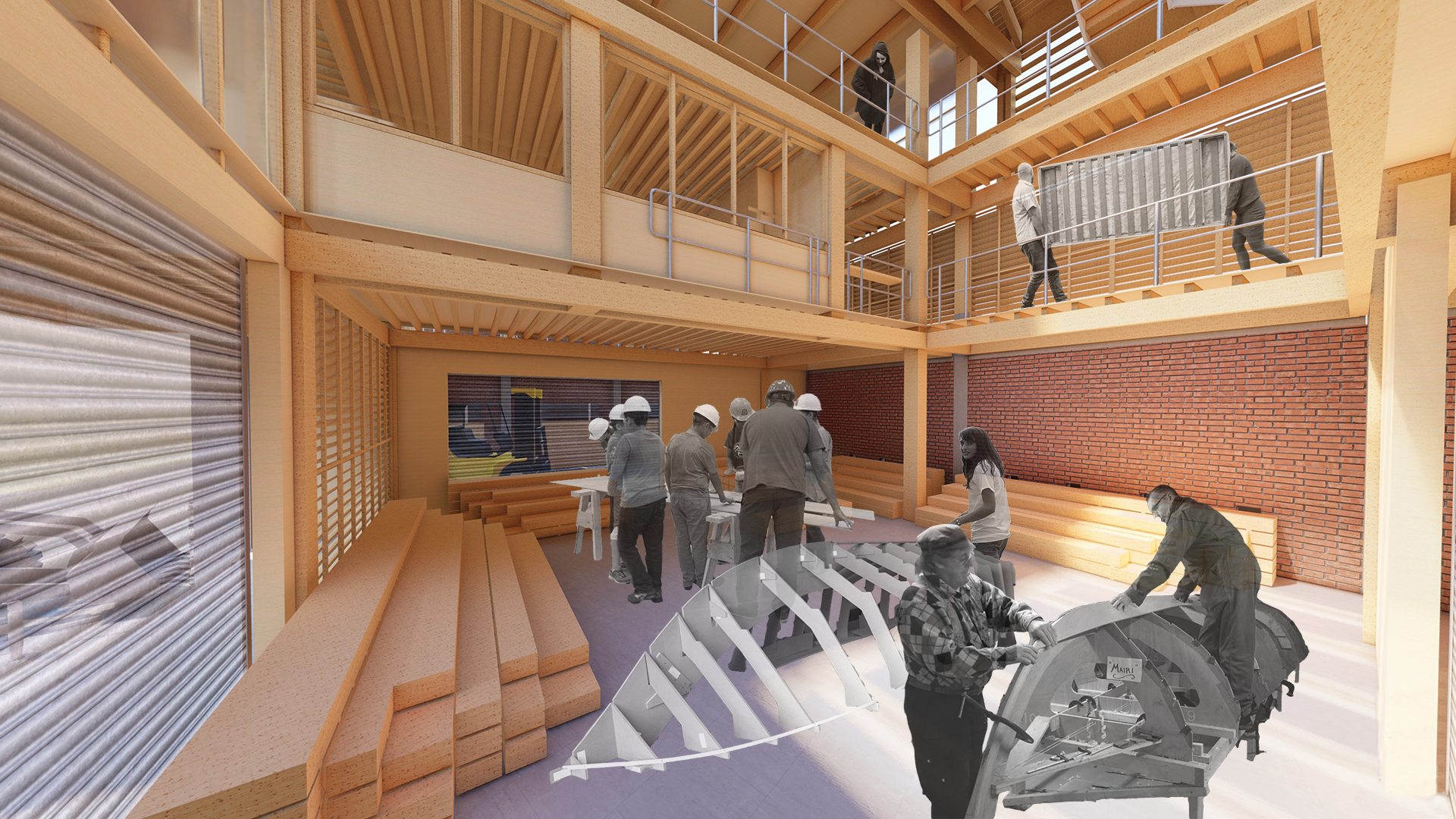
The timber drying room in the morning being used for boatbuilding and maintenance
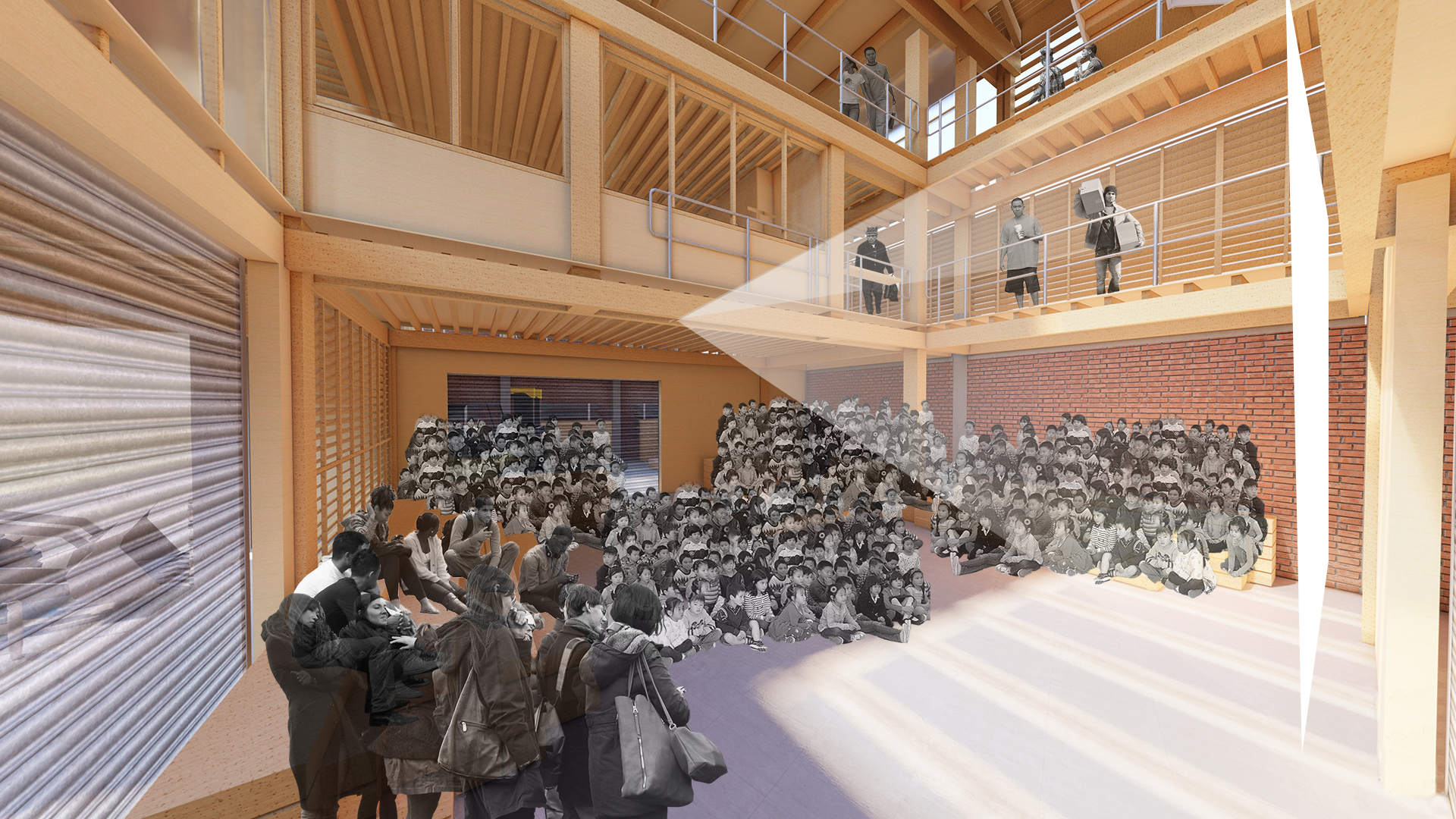
The timber drying room in the afternoon being used for after-school training programmes

Building Manual
The response to the conditions found in the harbour and Hangberg consist of an urban link, reconnecting the community with the sea, ways in which the adaptation of the building responds to its parameters, and how its programming, structural logic, spatial arrangements and materiality contribute to it being adaptable in the future.
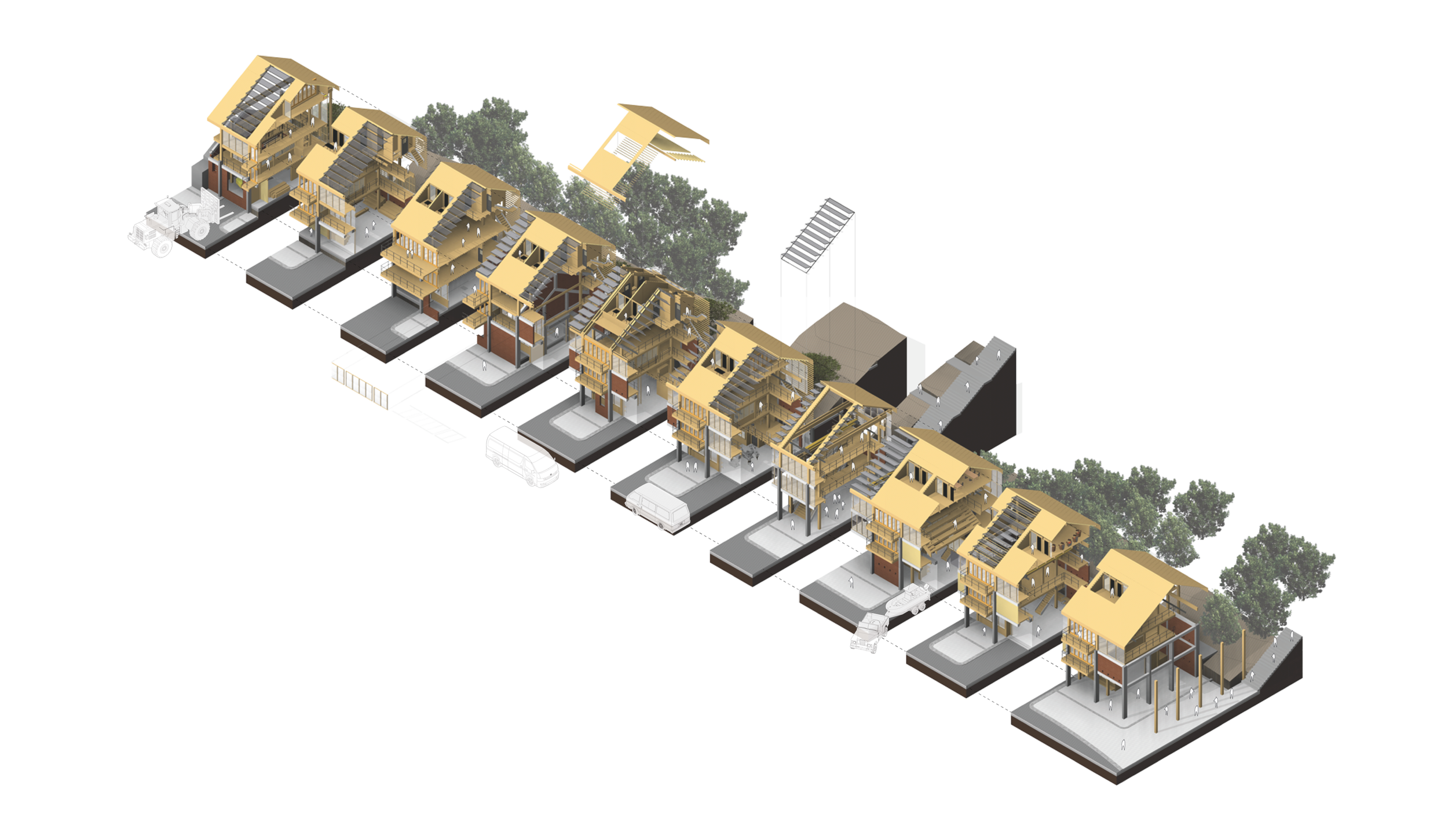
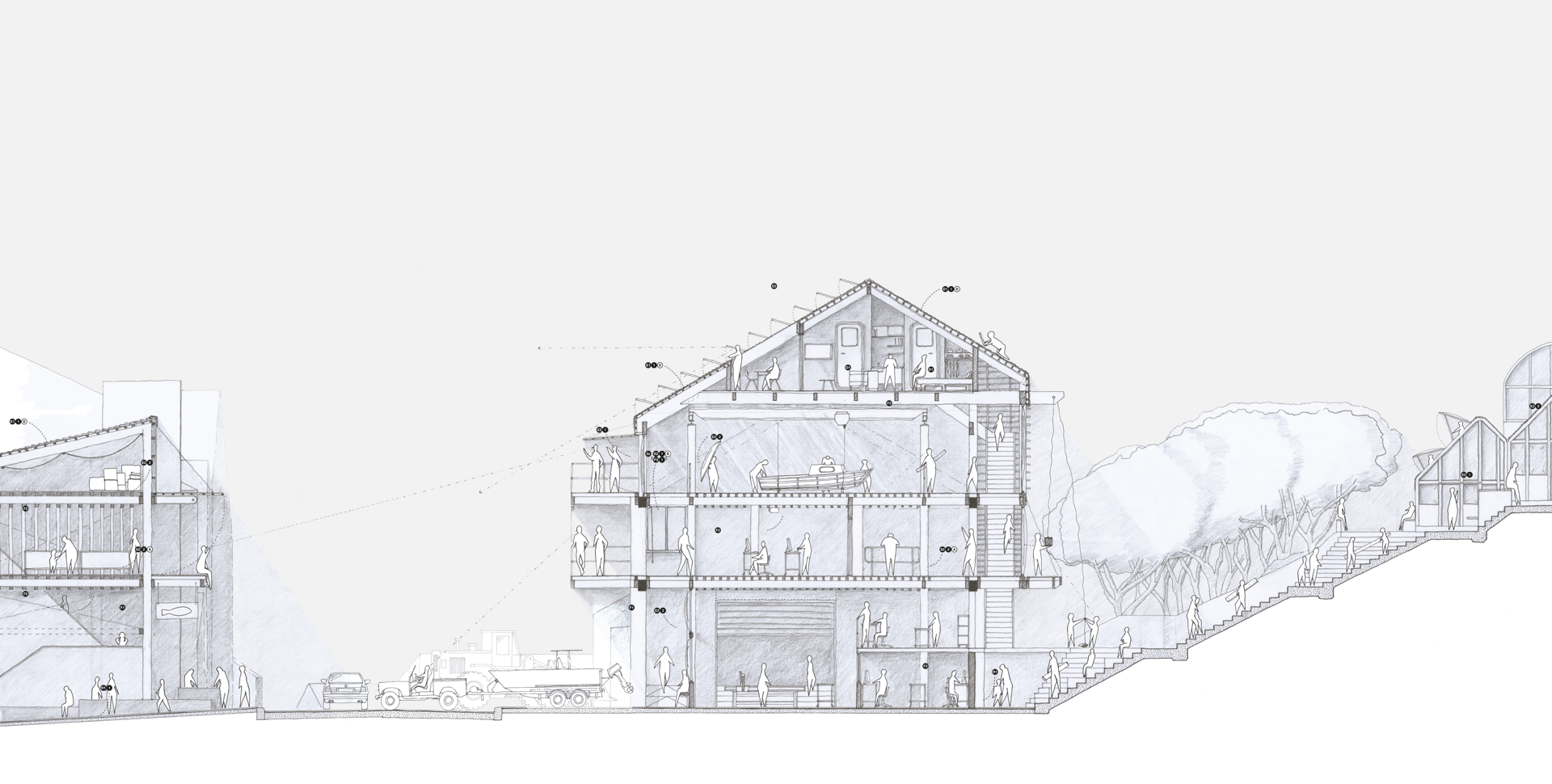
A section through the building, showing it being used and adapted with references to components from the Building Manual
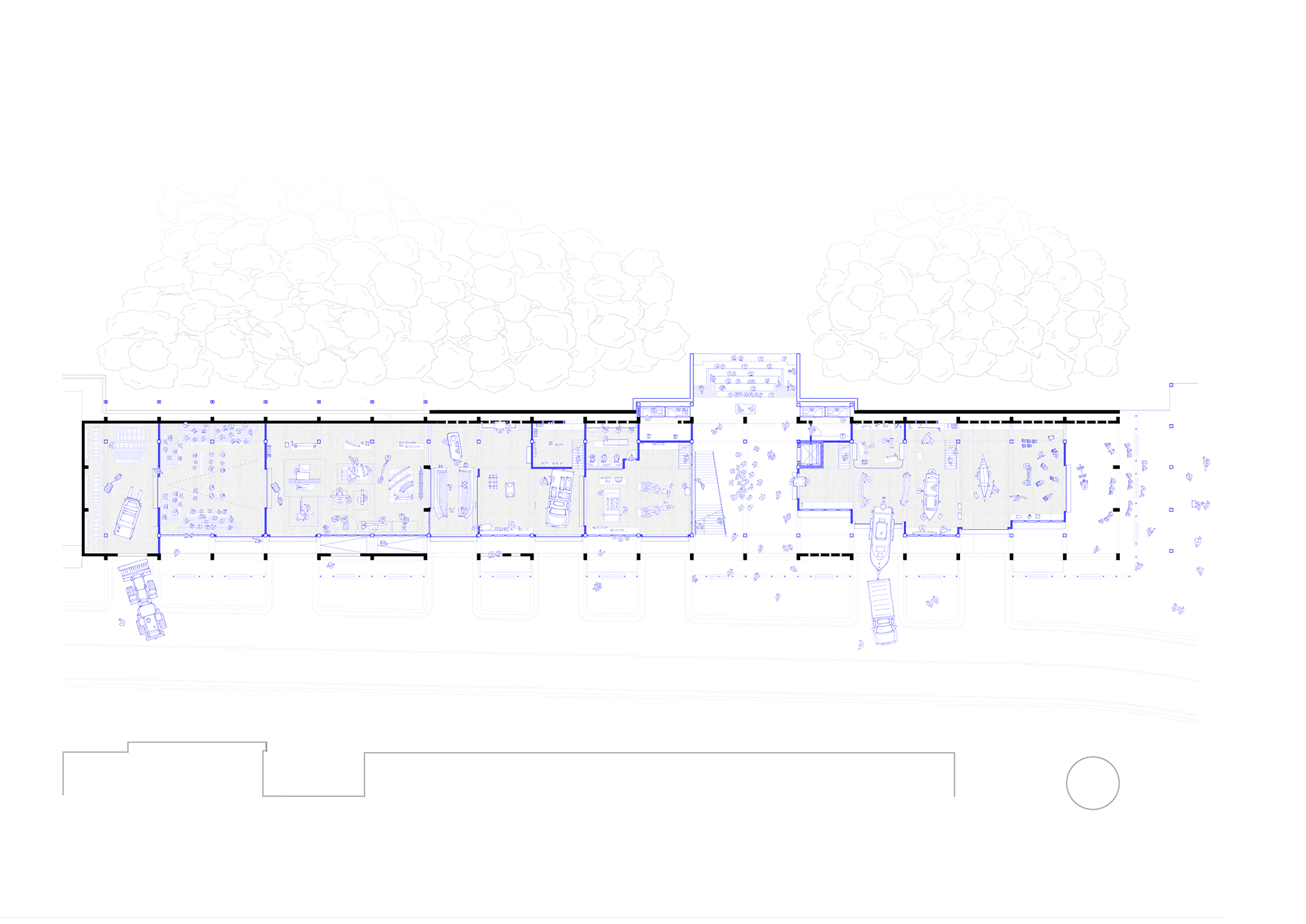
Ground Floor Plan
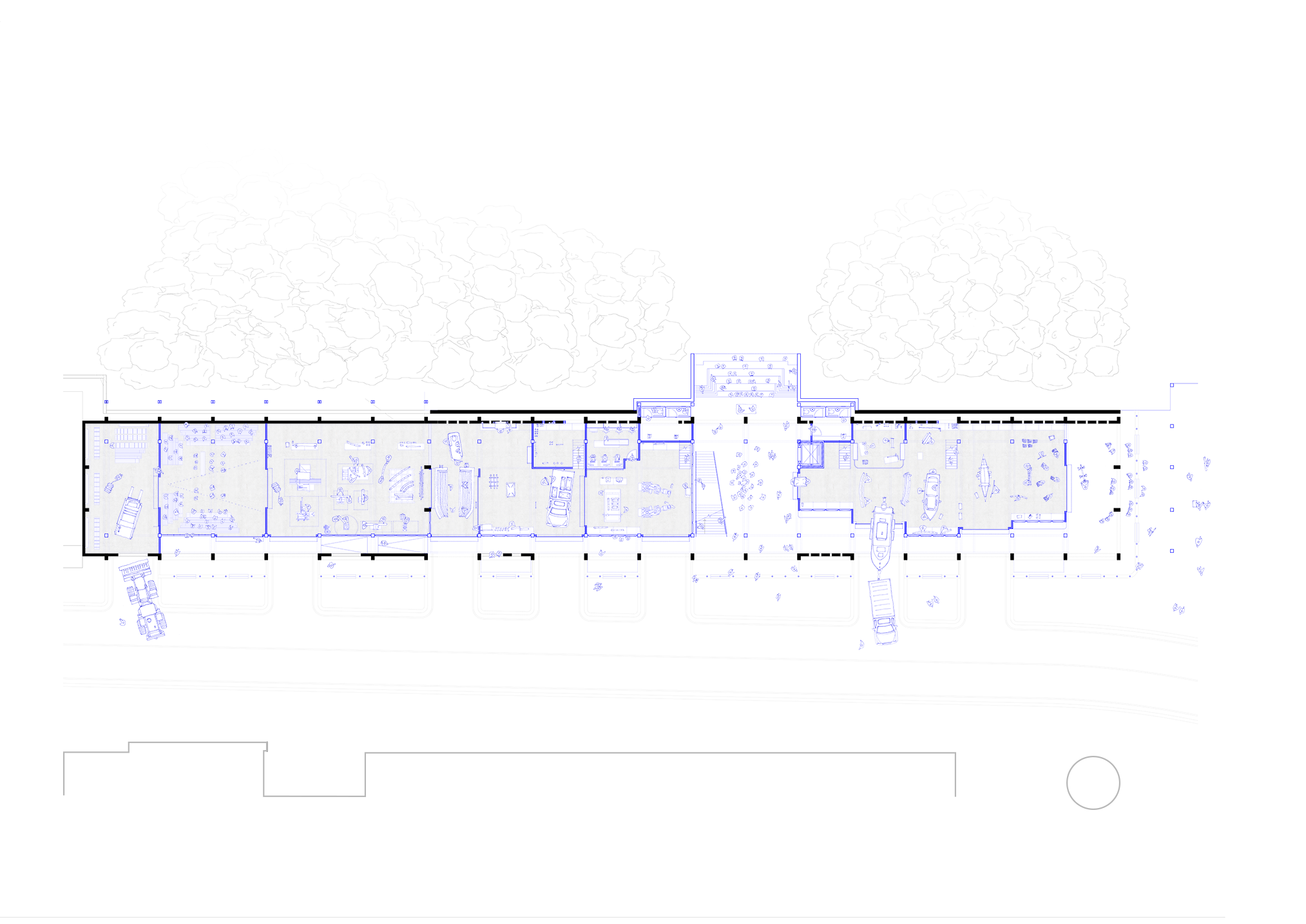
Ground Floor
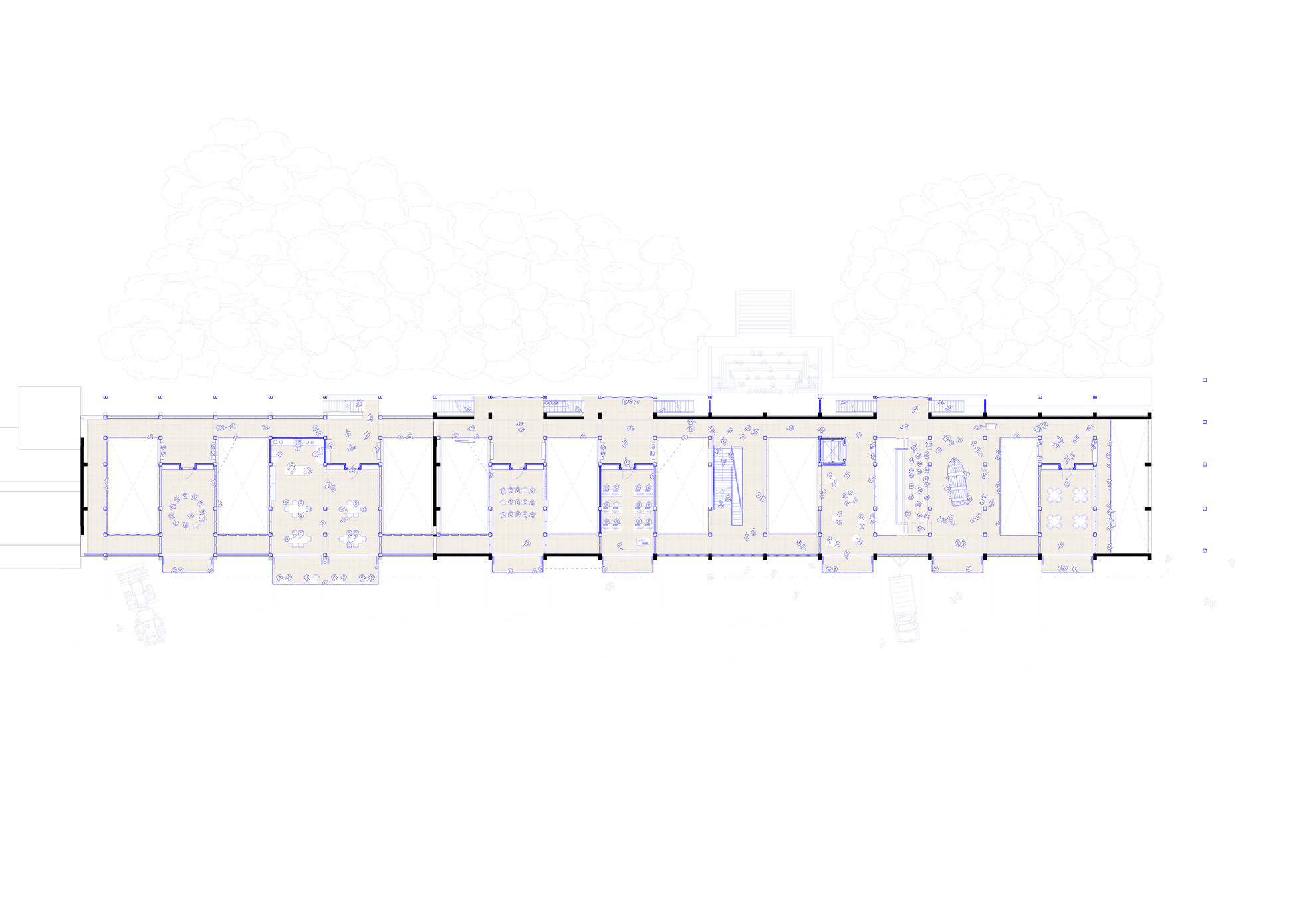
First Floor
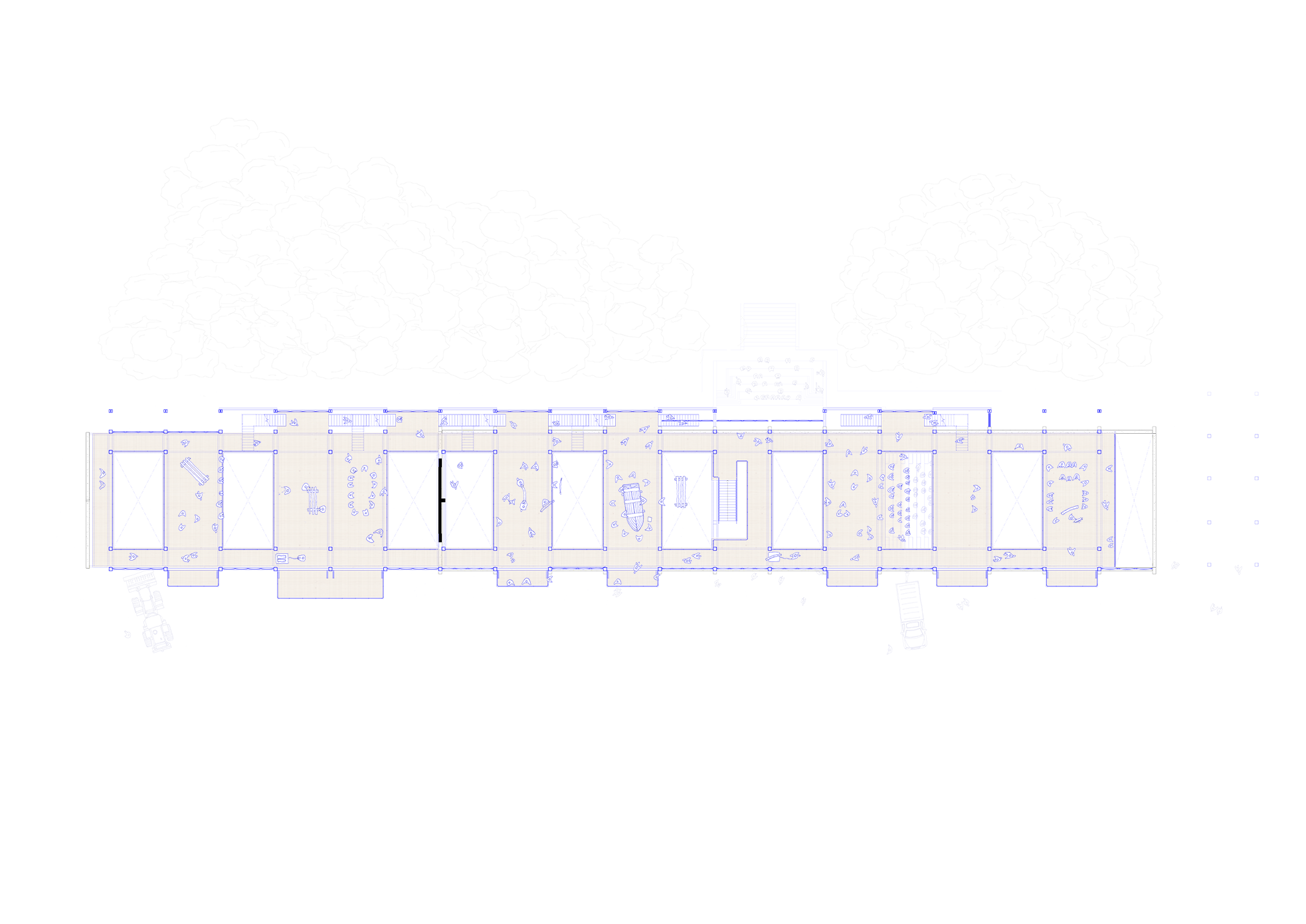
Second Floor
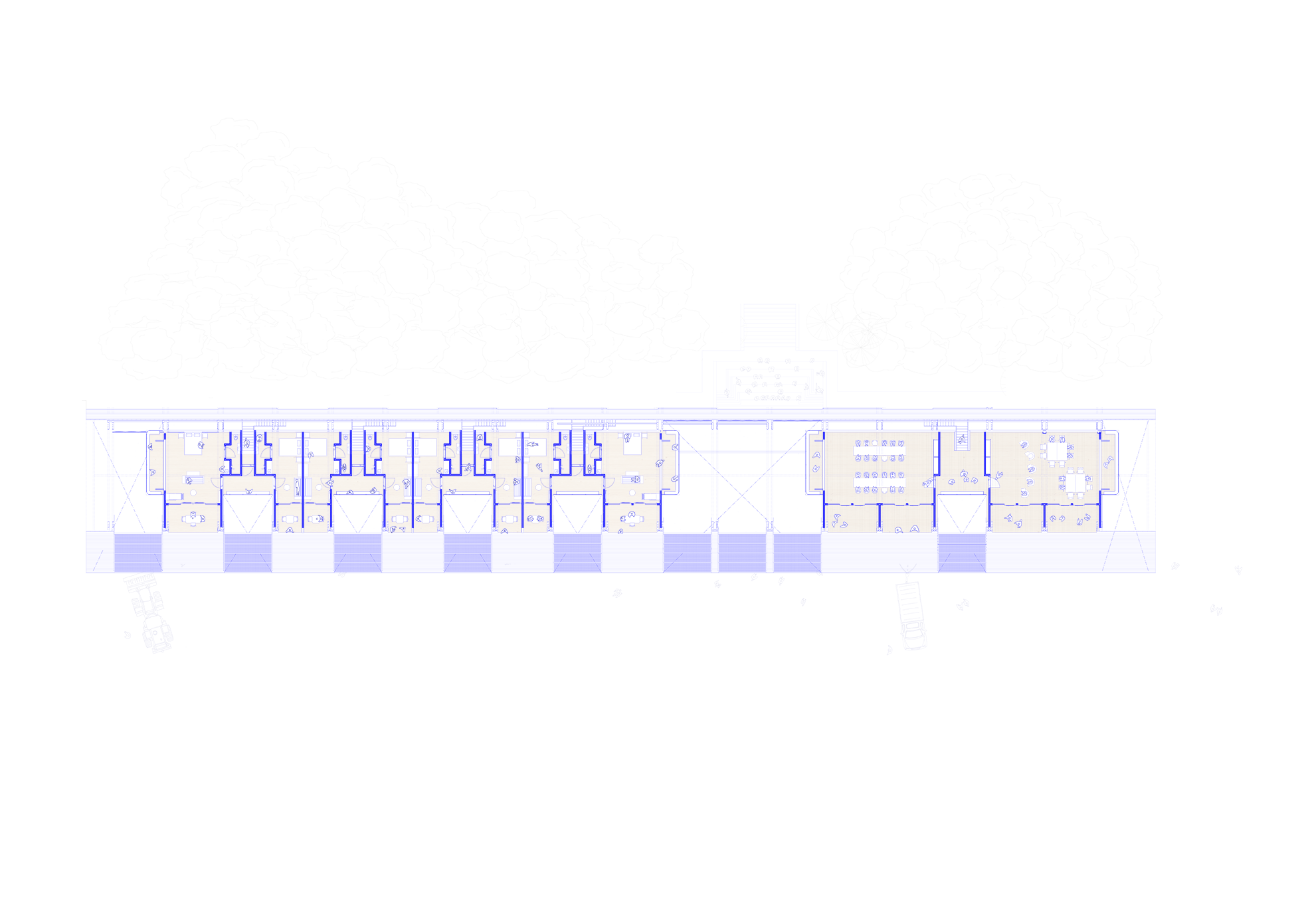
Third Floor